

Introduction
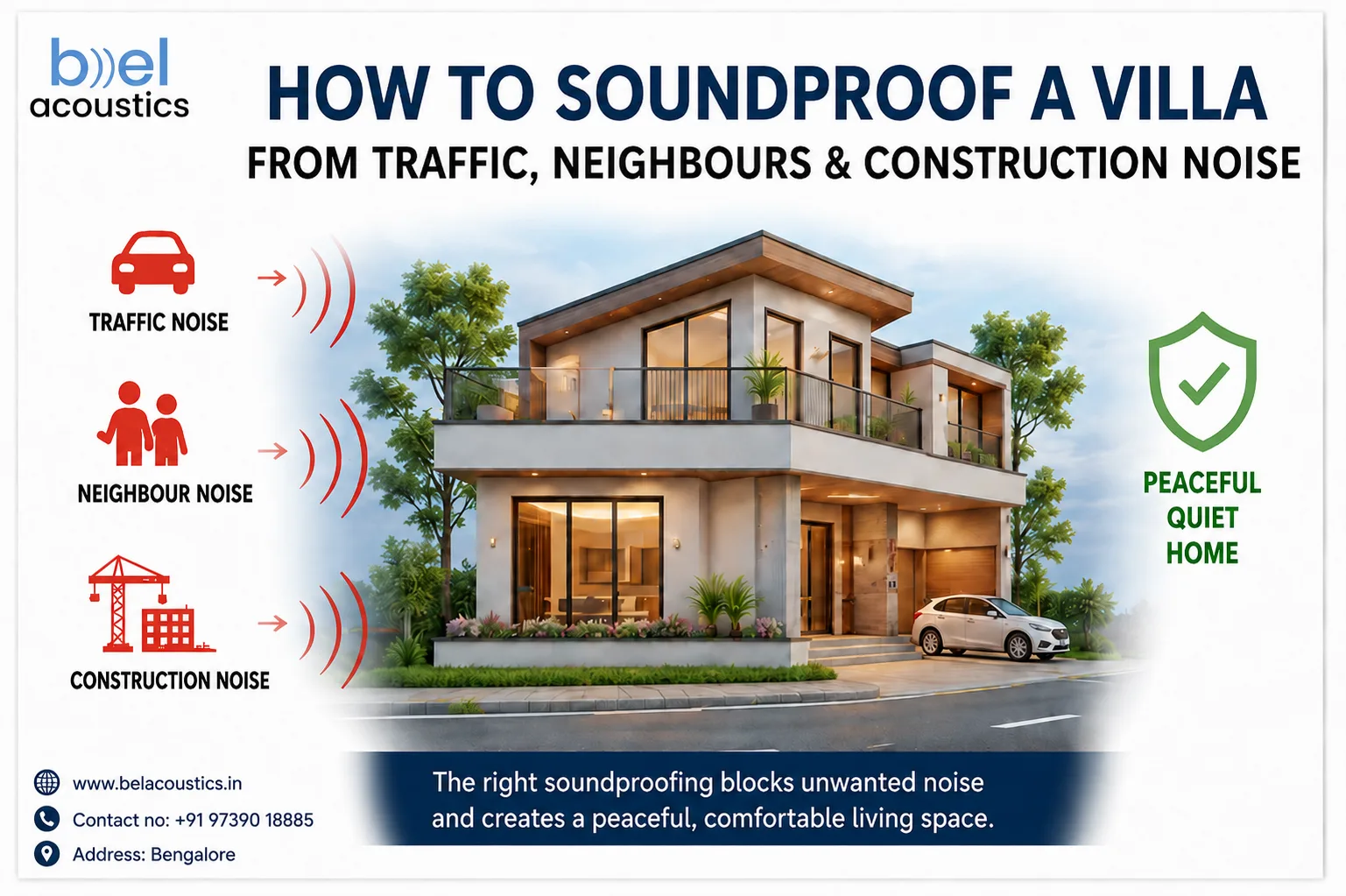
A villa should feel peaceful, private and comfortable. But traffic noise, neighbour sounds and nearby construction can quickly disturb sleep, work, family time and luxury living.
If you are searching for how to soundproof a villa from traffic, neighbours & construction noise, the solution is not just adding thick curtains or closing windows. Real noise reduction needs a proper plan for windows, walls, doors, ceilings, floors and outdoor noise paths.
This guide explains simple, practical and effective villa soundproofing solutions for homes, luxury villas, farmhouses, duplex homes and premium residences.
Quick Answer: How Do You Soundproof a Villa?
To soundproof a villa, first identify where the noise enters: windows, doors, walls, ceiling, floor or gaps. Then use soundproof windows, door sealing, acoustic wall insulation, soft flooring, ceiling treatment and outdoor barriers. For strong traffic, neighbour or construction noise, professional acoustic assessment gives the best result.
Why Villa Soundproofing Is Important
Villas are usually built for comfort, space and privacy. But many villas still face serious noise problems because of:
- Main road traffic
- Honking and vehicle movement
- Nearby construction work
- Generator noise
- Neighbour parties or music
- Dog barking
- Children playing outside
- Plumbing and service area noise
- Echo inside large rooms
- Poor window and door sealing
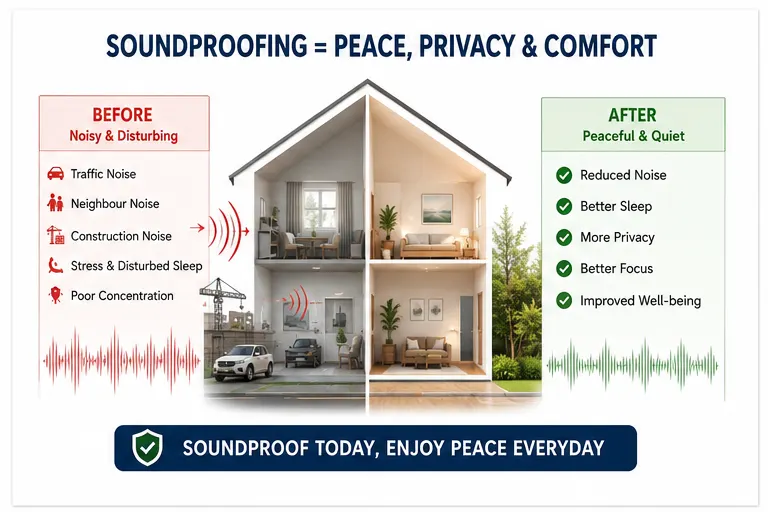
Noise does not only disturb comfort. It can affect sleep, focus, mood and productivity. That is why noise reduction for villas is now becoming an important part of modern home design.
How to Soundproof a Villa from Traffic, Neighbours & Construction Noise
The best way to soundproof a villa is to treat the weakest points first. In most villas, the biggest noise leaks are windows, balcony doors, main doors, wall gaps and ceiling openings.
Step 1: Identify the Source of Noise
Before starting any soundproofing work, understand the type of noise.
Common Villa Noise Sources
| Noise Source | Common Problem | Best Solution |
|---|---|---|
| Traffic noise | Enters through windows and walls | Soundproof windows, wall insulation |
| Neighbour noise | Enters through shared walls, compound gaps | Acoustic wall insulation, boundary treatment |
| Construction noise | Loud impact and machine noise | Window upgrades, wall mass, sealing |
| Generator noise | Low-frequency vibration | Acoustic enclosure, vibration isolation |
| Echo inside villa | Hard surfaces reflect sound | Acoustic panels, curtains, carpets |
Pro Tip
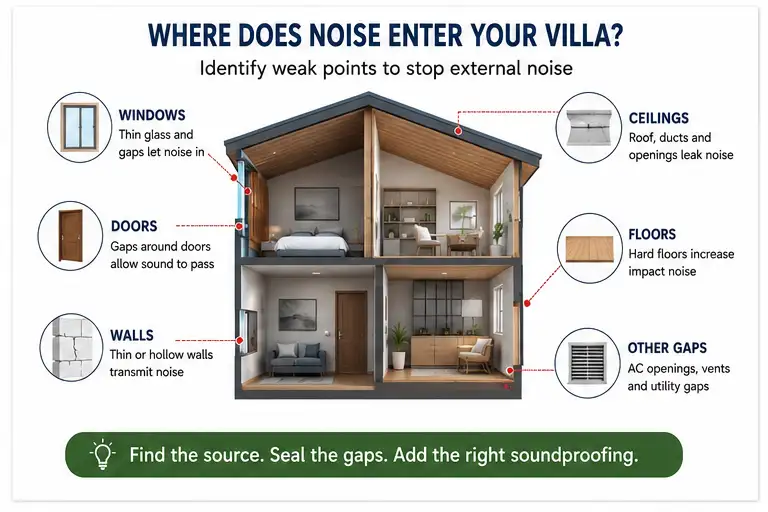
Do not start with random products. Start with a noise audit. This helps you know whether the problem is airborne noise, vibration noise or echo.
Main Causes of Noise Problems in Villas
1. Large Glass Windows
Modern villas often use large windows and sliding doors. They look beautiful, but standard glass allows outside noise to enter easily.
Traffic noise, honking and construction noise usually enter through:
- Sliding windows
- Balcony doors
- French windows
- Thin glass panels
- Poor window gaps
- Weak aluminium frames
2. Gaps Around Doors and Windows
Even a small gap can allow sound to pass. If air can enter, sound can enter too.
Common gap areas include:
- Bottom of doors
- Window frame edges
- Sliding door channels
- Balcony door sides
- Ventilator gaps
- AC pipe openings
3. Thin External Walls
Some villa walls are not designed for heavy external noise control. If the wall has low mass or poor insulation, outside noise can pass through.
This is common near:
- Main roads
- Metro construction zones
- Highway-facing villas
- Villas near schools, clubs or commercial roads
4. Hard Interior Surfaces
Luxury villas often use marble, tiles, glass, wooden panels and high ceilings. These surfaces reflect sound and increase echo.
This makes the room feel louder even when the outside noise is moderate.
5. Poor Ceiling and Roof Insulation
Noise can also enter through roof slabs, false ceilings, ducts and service openings. This is common in villas with open terrace areas, skylights or mechanical rooms.
Best Villa Soundproofing Solutions
1. Install Soundproof Windows for Villa Noise Control
Windows are usually the first area to treat for traffic noise reduction and construction noise reduction.
Best window solutions include:
- Laminated acoustic glass
- Double-glazed windows
- UPVC soundproof windows
- Airtight window sealing
- Heavy-duty window frames
- Acoustic silicone sealing
- Secondary glazing
Best for:
- Road-facing bedrooms
- Living rooms near traffic
- Home offices
- Home theatres
- Senior citizen rooms
- Children’s bedrooms
Pro Tip
Changing only the glass may not solve the problem if the frame has gaps. A good soundproof window needs the right glass, frame and sealing.
2. Seal All Door and Window Gaps
Sound travels through air gaps. Sealing is one of the most cost-effective steps in external noise control.
Areas to seal:
- Door bottom gap
- Window frame joints
- Sliding door channels
- AC duct openings
- Electrical box gaps
- Plumbing shaft openings
- Ceiling service holes
Materials commonly used:
- Acoustic sealant
- Rubber gaskets
- Door drop seals
- Weatherstrips
- Foam backing rods
- Acoustic tapes
Real-World Example
If your bedroom faces a busy road, you may still hear honking even after closing the window. In many cases, the sound enters through small gaps around the window frame, not only through the glass.
3. Add Acoustic Wall Insulation
If noise is coming through walls, especially from neighbours or roads, wall treatment is needed.
Acoustic wall insulation may include:
- High-density acoustic board
- Rockwool or glass wool insulation
- Gypsum board layering
- Mass loaded barrier
- Air gap design
- Fabric acoustic wall panels
- Decoupled wall systems
Best for:
- Shared neighbour walls
- Road-facing walls
- Home theatre rooms
- Bedrooms
- Study rooms
- Meditation rooms
- Luxury villa living rooms
Pro Tip
For strong neighbour noise control, avoid only decorative panels. You need a proper wall build-up with mass, absorption and sealing.
4. Use Solid-Core Doors
Many villas use stylish but hollow doors. These doors look premium but do not block sound well.
Better door options:
- Solid-core wooden doors
- Acoustic-rated doors
- Rubber-sealed door frames
- Automatic drop seals
- Heavy door shutters
- Double-door lobby design
Best areas to upgrade:
- Bedroom doors
- Home office doors
- Home theatre doors
- Main entrance doors
- Study room doors
Pro Tip
A heavy door without sealing will still leak sound. Door sealing is as important as the door material.
5. Treat the Ceiling for Noise and Echo
Ceiling treatment helps when there is echo inside the villa or noise from upper floors, terrace areas or service equipment.
Ceiling acoustic solutions:
- Acoustic false ceiling
- Perforated acoustic ceiling panels
- Fabric-wrapped ceiling panels
- Rockwool insulation above false ceiling
- Ceiling baffles for double-height areas
Best for:
- Double-height living rooms
- Home theatres
- Entertainment rooms
- Open-plan villas
- Dining areas
- Indoor courtyards
6. Add Carpet Flooring or Rugs
Hard floors increase echo and footstep noise. Adding soft flooring improves room comfort.
Useful options:
- Wall-to-wall carpet
- Large area rugs
- Carpet tiles
- Underlay mats
- Acoustic floor mats
Best for:
- Bedrooms
- Home offices
- Children’s rooms
- Media rooms
- Lounge areas
Pro Tip
Carpets do not block heavy traffic noise from outside, but they reduce echo and improve indoor acoustic comfort.
7. Use Outdoor Noise Barriers
For villas near roads or construction areas, outdoor treatment can reduce noise before it reaches the building.
Outdoor noise control options:
- Boundary wall height improvement
- Green acoustic barriers
- Dense landscaping
- Acoustic fencing
- Water features for masking noise
- Generator acoustic enclosures
Best plants for noise buffering:
- Bamboo
- Areca palm
- Ficus
- Dense hedge plants
- Tall shrubs
Important Note
Plants alone cannot fully soundproof a villa. But dense landscaping can help reduce sharpness and improve privacy when combined with wall and window treatments.
Soundproofing Different Areas of a Villa
Bedroom Soundproofing
Bedrooms need the highest noise control because sleep quality is important.
Best bedroom solutions:
- Soundproof windows
- Door bottom sealing
- Acoustic curtains
- Wall insulation for road-facing walls
- Carpet or rug
- Soft headboard panels
Living Room Soundproofing
Living rooms often have large glass, high ceilings and hard flooring.
Best living room solutions:
- Acoustic curtains
- Ceiling acoustic panels
- Fabric wall panels
- Rugs
- Window sealing
- Soft furniture layout
Home Office Soundproofing
For calls, meetings and focus work, speech clarity and privacy matter.
Best home office solutions:
- Solid-core door
- Acoustic wall panels
- Window sealing
- Ceiling absorption
- Carpet flooring
- Background noise control
Home Theatre Soundproofing
Home theatres need both sound isolation and sound quality.
Best home theatre solutions:
- Acoustic wall insulation
- Bass traps
- Door sealing
- Ceiling treatment
- Fabric acoustic panels
- Speaker calibration
- Floating or isolated surfaces if needed
Traffic Noise Reduction for Villas
Traffic noise is one of the most common problems in urban villas. It includes honking, engines, bikes, trucks and tyre noise.
Best solutions for traffic noise:
- Upgrade to soundproof windows
- Seal all window gaps
- Add acoustic curtains
- Treat road-facing walls
- Use solid doors
- Add boundary wall or outdoor barrier
- Use soft interior finishes
Example
If your master bedroom faces a main road, the best combination is acoustic windows, sealed frames, heavy curtains and wall insulation on the road-facing side.
Neighbour Noise Control for Villas
Neighbour noise can come from parties, music, children, pets, vehicles or shared compound areas.
Best solutions for neighbour noise:
- Add acoustic wall insulation on shared side
- Seal window and door gaps
- Use boundary wall treatment
- Install acoustic fencing if needed
- Add soft interior finishes
- Plan bedrooms away from noisy sides
Pro Tip
Neighbour noise is often mixed noise. It may include voices, bass music and impact sounds. Each type needs a different treatment.
Construction Noise Reduction for Villas
Construction noise is usually loud and irregular. It may include drilling, hammering, cutting machines, truck movement and concrete work.
Best solutions for construction noise:
- Close and seal all openings
- Upgrade road-facing or site-facing windows
- Add temporary acoustic curtains
- Treat exposed walls
- Use white noise or sound masking inside bedrooms
- Create one quiet room with stronger treatment
Practical Advice
If construction is temporary, focus on bedroom and workroom comfort first. If construction zones are common in your area, invest in permanent window and wall soundproofing.
Common Mistakes in Villa Soundproofing
Mistake 1: Using Only Curtains
Curtains can reduce echo and soften sound, but they cannot block strong traffic or construction noise alone.
Mistake 2: Ignoring Small Gaps
Small gaps around windows and doors can reduce the performance of even expensive soundproofing materials.
Mistake 3: Treating Only One Surface
Noise can enter through windows, walls, doors, ceilings and gaps. A complete approach works better.
Mistake 4: Confusing Acoustic Panels with Soundproofing
Acoustic panels reduce echo inside a room. They do not fully stop outside noise unless used as part of a proper wall system.
Mistake 5: Choosing Low-Quality Window Frames
Good glass with a poor frame will still leak sound. Frame quality and sealing matter.
Mistake 6: Not Doing a Site Assessment
Every villa is different. A road-facing villa, corner villa, gated community villa and farmhouse all need different solutions.
Step-by-Step Villa Soundproofing Plan
Step 1: Find the Main Noise Source
Check whether the noise is from traffic, neighbours, construction, generators or indoor echo.
Step 2: Identify Entry Points
Inspect:
- Windows
- Doors
- Wall cracks
- Ceiling gaps
- AC openings
- Ventilators
- Balcony doors
- Service shafts
Step 3: Start with Sealing
Seal gaps before adding expensive materials.
Step 4: Upgrade Windows
For external noise, soundproof windows usually give the biggest improvement.
Step 5: Treat Walls if Needed
Use acoustic wall insulation for road-facing or neighbour-facing walls.
Step 6: Improve Doors
Use solid-core doors with proper sealing.
Step 7: Add Interior Acoustic Comfort
Use rugs, acoustic panels, curtains and ceiling treatment to reduce echo.
Step 8: Get Professional Acoustic Design
For luxury villas, home theatres or heavy noise issues, professional design saves time and money.
Luxury Villa Soundproofing: What Makes It Different?
Luxury villa soundproofing is not only about blocking noise. It must also match the interior design.
Premium solutions include:
- Fabric-wrapped acoustic panels
- Wooden acoustic finishes
- Invisible acoustic wall systems
- Designer acoustic ceilings
- Acoustic doors
- Soundproof windows
- Home theatre acoustic design
- Noise-controlled bedrooms
- Quiet home office setup
The goal is simple: peaceful living without spoiling the luxury look.
Internal Linking Suggestions
Add these internal links inside the blog:
- Home Soundproofing Solutions
Suggested anchor text:home soundproofing solutions - Acoustic Wall Panels for Homes
Suggested anchor text:acoustic wall panels for homes - Home Theatre Acoustic Design
Suggested anchor text:home theatre acoustics - Office Acoustic Solutions
Suggested anchor text:office noise reduction solutions - Acoustic Comfort in Interior Design
Suggested anchor text:acoustic comfort interior design - Soundproof Windows and Doors
Suggested anchor text:soundproof windows for villa
FAQs: Villa Soundproofing
1. What is the best way to soundproof a villa from traffic noise?
The best way is to treat windows first, seal all gaps, and add acoustic wall insulation on the road-facing side. For strong traffic noise, soundproof windows with proper frame sealing are usually the most effective solution.
2. Do acoustic curtains stop outside noise?
Acoustic curtains can reduce some noise and echo, but they cannot fully stop heavy traffic or construction noise. They work best when combined with soundproof windows and sealed gaps.
3. Can I soundproof only one room in my villa?
Yes. Many homeowners first soundproof the bedroom, home office or home theatre. This creates one quiet space without treating the full villa at once.
4. What is the difference between acoustic panels and soundproofing?
Acoustic panels reduce echo inside a room. Soundproofing blocks sound from entering or leaving a room. For external noise control, you need sealing, mass, insulation and proper window or wall treatment.
5. How do I reduce neighbour noise in a villa?
Use acoustic wall insulation on the neighbour-facing wall, seal doors and windows, add soft furnishings and consider outdoor boundary treatment. If bass music or impact noise is involved, a stronger acoustic system may be needed.
6. Are soundproof windows worth it for villas?
Yes, especially for villas near roads, construction sites, schools or busy neighbourhoods. Soundproof windows can make bedrooms, living rooms and home offices much quieter.
7. Can plants reduce noise around a villa?
Dense landscaping can help soften outdoor noise, but plants alone cannot fully soundproof a villa. They work better when combined with boundary walls, acoustic fencing and window treatment.
8. How much does villa soundproofing cost?
The cost depends on room size, noise level, materials and treatment area. Basic sealing costs less, while soundproof windows, acoustic wall insulation and luxury acoustic interiors require a higher budget.
9. Is villa soundproofing possible after construction?
Yes. Many soundproofing solutions can be added after construction, including acoustic windows, wall insulation, door sealing, ceiling treatment, acoustic panels and carpets.
10. Who should consider luxury villa soundproofing?
Luxury villa soundproofing is ideal for homeowners near traffic, construction, noisy neighbours, airports, clubs or commercial areas. It is also useful for home theatres, home offices, bedrooms and wellness rooms.
Conclusion
Soundproofing a villa is not about one product. It is about finding the noise source, sealing weak points and choosing the right solution for windows, walls, doors, ceilings and interiors.
For traffic noise, focus on soundproof windows and wall insulation. For neighbour noise, treat shared walls and gaps. For construction noise, create a strong quiet zone inside the villa.
A peaceful villa improves sleep, privacy, work focus and overall comfort.
If you want professional villa soundproofing solutions, BEL Acoustics can help with site assessment, acoustic design and customized noise reduction systems for homes, villas and luxury residences.
Call to Action:
Contact BEL Acoustics today for villa noise reduction, soundproof windows, acoustic wall insulation and luxury home soundproofing solutions.
📞 Call / WhatsApp: +91 97390 18885
📧 Email: info@belacoustics.in
📍 Location: Bengaluru, India
🗺 Find us on Google Maps: https://g.co/kgs/ZKWQbuK