

Open offices look modern, flexible and collaborative. But when sound is not controlled, they quickly become noisy, distracting and stressful.
That is why Office Acoustic Solutions: Reduce Noise in Open Workspaces is now an important part of workplace design. From acoustic ceiling treatment to office wall panels, carpet flooring and speech privacy planning, the right acoustic design can make an office quieter, more focused and more comfortable for employees.
In this guide, you will learn why open offices become noisy, what solutions work best, and how to design a workspace that supports productivity, privacy and better communication.
Quick Answer: How Can You Reduce Noise in Open Workspaces?
The best way to reduce noise in open workspaces is to combine acoustic panels, ceiling absorption, carpet flooring, workstation zoning, soft furniture and speech privacy planning. These solutions absorb echo, reduce sound reflection, control speech distraction and create quieter areas for focused work, meetings and collaboration.
Why Open Office Acoustics Matter
Open offices are designed to improve teamwork. But without proper acoustic planning, they can create constant sound distractions.
Common noise problems include:
- Phone calls
- Team discussions
- Keyboard and chair movement
- Footsteps
- Meeting room leakage
- Printer and pantry noise
- Echo from hard walls, glass and ceilings
When employees hear too many conversations at once, focus becomes difficult. Even low-level speech noise can feel tiring when it continues all day.
Good office acoustic design does not make the office silent. It makes the sound balanced, controlled and comfortable.
What Causes Noise Problems in Open Offices?
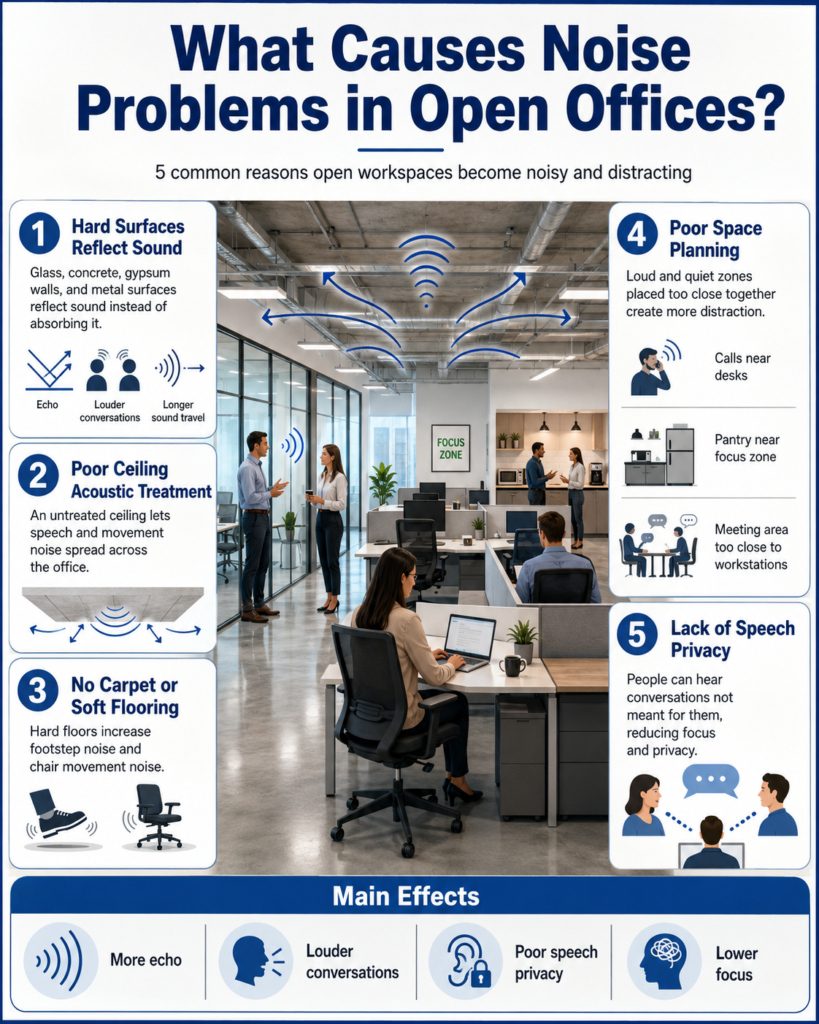
1. Hard Surfaces Reflect Sound
Modern offices often use glass partitions, concrete floors, gypsum walls, metal ceilings and open layouts. These surfaces reflect sound instead of absorbing it.
The result is:
- More echo
- Louder conversations
- Longer sound travel
- Poor speech privacy
2. Poor Ceiling Acoustic Treatment
In many open workspaces, the ceiling is the largest untreated surface. If the ceiling does not absorb sound, speech and movement noise spread across the room.
This is why ceiling acoustic treatment is one of the most effective solutions for open office acoustics.
3. No Carpet or Soft Flooring
Hard flooring such as tile, stone or concrete increases footstep noise and chair movement noise.
Carpet flooring for noise reduction helps reduce impact sound and makes the office feel calmer.
4. Poor Space Planning
Noise increases when loud and quiet activities are placed too close together.
For example:
- Sales calls near finance teams
- Meeting rooms near workstations
- Pantry areas beside focus zones
- Printer zones near desks
A good acoustic layout separates these activities.
5. Lack of Speech Privacy
In open offices, people often hear conversations that are not meant for them. This creates two problems:
- Employees lose focus
- Confidential discussions become less private
Speech privacy in office design is important for HR areas, finance teams, management cabins, meeting rooms and client discussion zones.
Office Acoustic Solutions: Reduce Noise in Open Workspaces
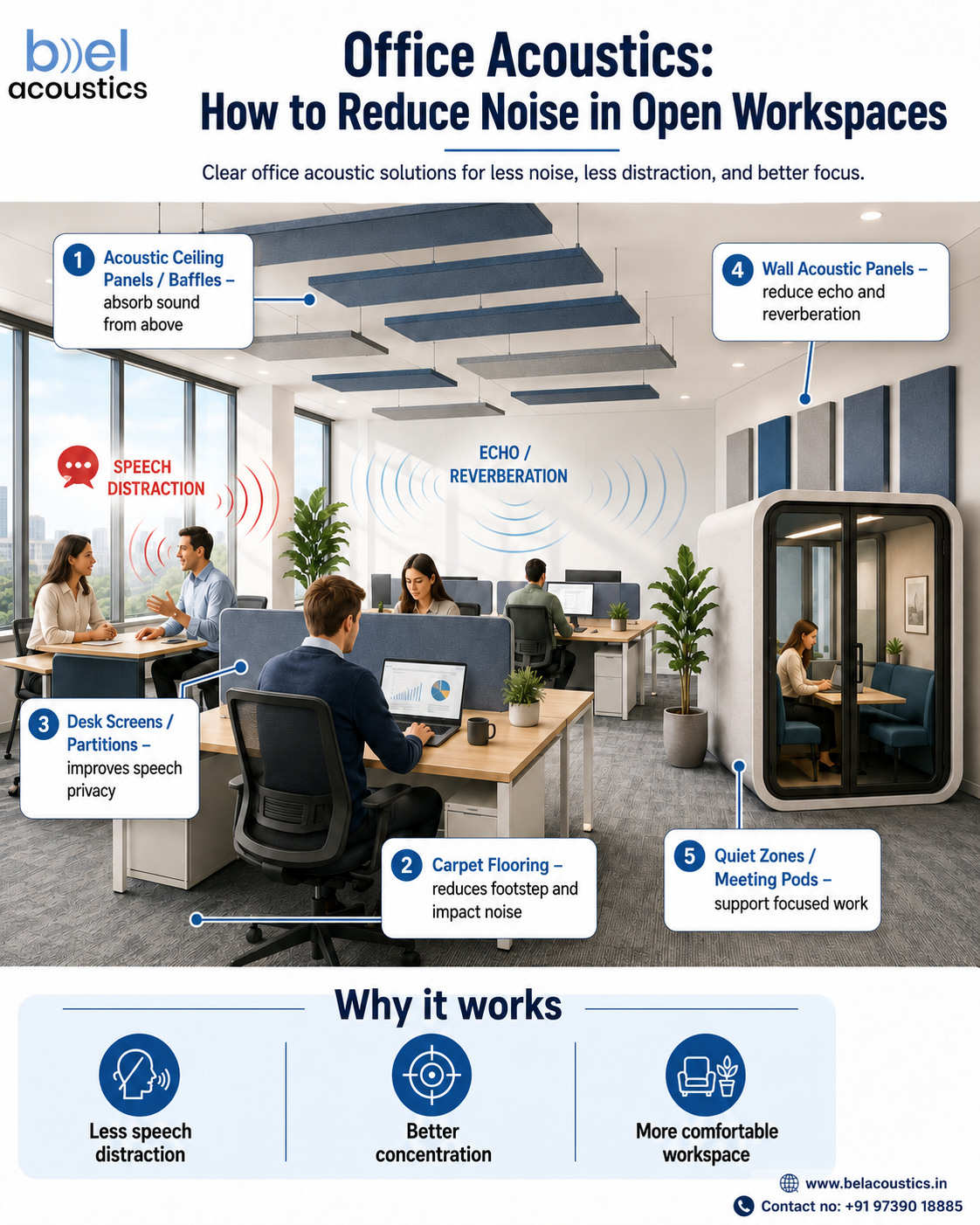
The best results come from combining multiple acoustic strategies. One product alone may not solve the complete problem.
1. Install Acoustic Panels for Office Walls
Acoustic panels for office spaces absorb sound reflections from walls and reduce echo.
They are useful for:
- Open workstations
- Meeting rooms
- Conference rooms
- Reception areas
- Manager cabins
- Training rooms
- Collaboration zones
Best Places to Install Wall Acoustic Panels
- Behind workstations
- On large empty walls
- Near discussion areas
- Inside meeting rooms
- Around video conferencing zones
- Near glass partitions
Pro Tip
Use fabric acoustic panels, wooden slat acoustic panels or designer acoustic wall panels that match your office interior. This gives both noise control and premium design value.
2. Use Ceiling Acoustic Treatment
The ceiling is one of the most powerful areas for sound absorption in an office.
Common ceiling acoustic solutions include:
- Acoustic ceiling tiles
- Hanging acoustic baffles
- Acoustic clouds
- Suspended fabric panels
- Perforated wooden ceiling systems
- PET felt ceiling panels
These treatments reduce reflected sound and improve speech clarity.
Best For
- Large open offices
- Call centers
- Co-working spaces
- Cafeterias
- Training halls
- Reception areas
- Conference rooms
Pro Tip
If your office has exposed services, use acoustic baffles or hanging clouds. They control sound without hiding the industrial ceiling look.
3. Add Carpet Flooring for Noise Reduction
Carpet helps reduce noise from footsteps, rolling chairs and movement across the office.
It works well in:
- Workstation areas
- Corridors
- Meeting rooms
- Manager cabins
- Breakout zones
- Boardrooms
Carpet also adds warmth and comfort to the workspace.
Best Options
- Carpet tiles
- Acoustic underlay
- Rug zones
- Soft flooring in focus areas
Pro Tip
Carpet tiles are ideal for commercial offices because they are easy to replace, maintain and customize.
4. Create Acoustic Zoning
Acoustic zoning means planning the office based on sound levels.
Divide the office into:
- Quiet focus zones
- Collaboration zones
- Phone call zones
- Meeting zones
- Reception zones
- Pantry zones
- Printing and utility zones
This reduces sound conflict between different teams.
Example
A sales team may need regular phone calls. A finance team may need silence and focus. Placing both teams side by side creates daily disturbance. Acoustic zoning solves this by separating them and adding sound control between zones.
Pro Tip
Always place high-noise areas away from focused work areas.
5. Improve Meeting Room Soundproofing
Meeting rooms often leak sound into open offices. This affects privacy and disturbs employees nearby.
To improve soundproofing office spaces, focus on:
- Door sealing
- Acoustic glass partitions
- Solid-core doors
- Acoustic wall panels
- Ceiling insulation
- Carpet flooring
- Proper HVAC noise control
Common Meeting Room Problems
- Sound leakage through doors
- Echo during video calls
- Poor speech clarity
- Noise entering from open office areas
- Confidential conversations being heard outside
Pro Tip
For meeting rooms, combine sound isolation and internal absorption. Isolation blocks sound leakage, while absorption improves clarity inside the room.
6. Use Desk Dividers and Acoustic Screens
Desk screens help control direct speech noise between nearby employees.
They are useful in:
- Open workstation layouts
- Call teams
- Shared desks
- Co-working spaces
- Support teams
Acoustic screens do not fully soundproof a desk, but they reduce direct sound travel and improve comfort.
Pro Tip
Use screens with sound-absorbing material, not just glass or acrylic. Hard screens may block visibility but can reflect sound.
7. Add Soft Furniture and Interior Materials
Soft materials naturally absorb sound.
Use:
- Fabric sofas
- Upholstered chairs
- Curtains
- Rugs
- Plants
- Acoustic partitions
- Bookshelves
- Fabric pinboards
This improves acoustic comfort without making the office look technical.
Pro Tip
Acoustic comfort interior design works best when sound control is integrated into the look of the office.
8. Control Noise from Office Equipment
Printers, coffee machines, servers and pantry equipment can create constant background noise.
Place noisy equipment in separate zones with:
- Acoustic partitions
- Door seals
- Wall panels
- Soft flooring
- Distance from workstations
Pro Tip
Never place printers or pantry counters directly behind focused workstations.
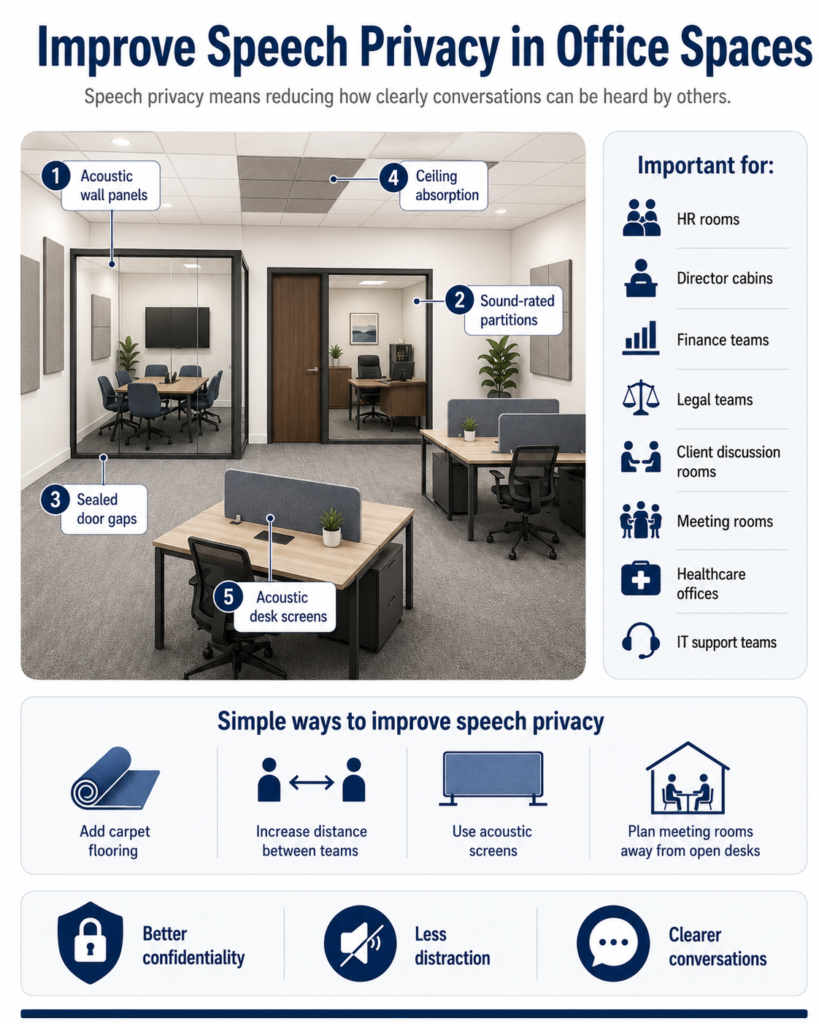
9. Improve Speech Privacy in Office Spaces
Speech privacy means reducing how clearly conversations can be heard by others.
This is important for:
- HR rooms
- Director cabins
- Finance teams
- Legal teams
- Client discussion rooms
- Meeting rooms
- Healthcare offices
- IT support teams
Ways to improve speech privacy:
- Add acoustic wall panels
- Use sound-rated partitions
- Seal door gaps
- Add ceiling absorption
- Use carpet flooring
- Increase distance between teams
- Use acoustic screens
- Plan meeting rooms away from open desks
Pro Tip
Speech privacy is not only about loudness. It is also about reducing speech clarity so people are not distracted by every word.
Step-by-Step Office Noise Reduction Strategy
Step 1: Identify the Main Noise Sources
Walk through the office and note where noise is coming from.
Check:
- Workstations
- Meeting rooms
- Pantry
- Reception
- Phone call areas
- Corridors
- Printers
- HVAC systems
Step 2: Find the Sound Reflection Areas
Look for large hard surfaces such as:
- Glass walls
- Bare ceilings
- Empty walls
- Hard floors
- Metal surfaces
- Long corridors
These areas often increase echo.
Step 3: Add Absorption First
Start with absorption on ceilings, walls and floors.
Priority order:
- Ceiling acoustic treatment
- Wall acoustic panels
- Carpet flooring
- Desk screens
- Soft furniture
Step 4: Improve Layout and Zoning
Separate loud and quiet teams. Create zones for calls, meetings and focused work.
Step 5: Treat Meeting Rooms
Add door seals, internal panels, carpet and ceiling treatment for better privacy and clarity.
Step 6: Review and Fine-Tune
After installation, check if employees still face noise issues. Add targeted treatments where needed.
Best Acoustic Materials for Office Interiors
Fabric Acoustic Panels
Best for meeting rooms, cabins and workstation areas.
Benefits:
- Good sound absorption
- Custom colors
- Premium finish
- Easy wall installation
PET Felt Panels
Best for modern offices and sustainable interiors.
Benefits:
- Lightweight
- Clean look
- Multiple design options
- Suitable for walls and ceilings
Wooden Slat Acoustic Panels
Best for premium offices, reception areas and boardrooms.
Benefits:
- Luxury appearance
- Better sound control
- Natural design feel
- Works well with modern interiors
Acoustic Ceiling Baffles
Best for open offices with high ceilings.
Benefits:
- Controls sound spread
- Keeps open ceiling look
- Good for large spaces
- Easy to install in rows
Carpet Tiles
Best for workstations and corridors.
Benefits:
- Reduces footstep noise
- Easy maintenance
- Replaceable tiles
- Better comfort
Real-World Example: Open Office Noise Problem
Problem
A 60-seat office had constant speech distraction. Employees near the sales team found it hard to focus. Meeting room conversations were also leaking into the workstation area.
Solution
The office used:
- Acoustic ceiling baffles
- Fabric wall panels
- Carpet tiles
- Acoustic desk screens
- Door sealing for meeting rooms
- Separate phone call zone
Result
The office became quieter, calls were less disturbing, meeting rooms had better privacy and employees reported better focus during work hours.
Common Mistakes in Office Acoustic Design
Mistake 1: Treating Only One Wall
One wall panel is not enough for a noisy open office. Sound reflects from ceilings, floors and other walls too.
Mistake 2: Using Only Decorative Panels
Not every decorative wall panel is acoustic. Always check if the product is designed for sound absorption.
Mistake 3: Ignoring the Ceiling
The ceiling is often the biggest missed opportunity in office noise reduction.
Mistake 4: Using Glass Everywhere
Glass looks premium but reflects sound. If glass is used heavily, balance it with acoustic panels, carpets and soft materials.
Mistake 5: Placing Noisy Teams Near Quiet Teams
Poor layout can create daily disturbance even if the office has acoustic materials.
Mistake 6: Not Sealing Meeting Room Doors
Even a small door gap can leak sound. Door sealing is a simple but powerful fix.
Mistake 7: Thinking Soundproofing and Acoustics Are the Same
Soundproofing blocks sound from entering or leaving a room. Acoustic treatment improves sound quality inside a room. Offices usually need both.
Office Acoustic Design Checklist
Use this checklist before designing or renovating an office:
- Are workstations protected from direct speech noise?
- Is the ceiling treated with acoustic material?
- Are large empty walls covered with acoustic panels?
- Is carpet or soft flooring used in key areas?
- Are meeting rooms sealed properly?
- Are pantry and printer zones away from desks?
- Are call teams separated from focus teams?
- Are there quiet zones for deep work?
- Are conference rooms free from echo?
- Is speech privacy planned for sensitive areas?
Benefits of Commercial Acoustic Solutions
Professional commercial acoustic solutions improve more than just sound. They improve the full workplace experience.
Key Benefits
- Better employee focus
- Less stress from noise
- Improved speech privacy
- Better meeting room clarity
- Better video call quality
- More premium interior feel
- Improved productivity
- Better client experience
- Reduced complaints about noise
A quiet office does not mean a dead office. It means a balanced workspace where people can talk, focus and collaborate without disturbing each other.
Where Should Acoustic Panels Be Used in an Office?
Acoustic panels can be used in many commercial spaces.
Best areas include:
- Open workstations
- Meeting rooms
- Boardrooms
- Director cabins
- Reception areas
- Conference rooms
- Training rooms
- Phone booths
- Breakout areas
- Cafeterias
- Co-working spaces
For open offices, combine wall panels with ceiling treatment and flooring solutions for better results.
FAQs: Office Acoustic Solutions
1. What are the best office acoustic solutions for open workspaces?
The best office acoustic solutions include acoustic wall panels, ceiling acoustic treatment, carpet flooring, acoustic desk screens, meeting room soundproofing and proper office zoning. A combination of these gives better noise control than using only one product.
2. How do acoustic panels reduce office noise?
Acoustic panels absorb sound reflections from walls and reduce echo. They make conversations clearer in meeting rooms and reduce speech distraction in open office areas.
3. Is carpet flooring good for office noise reduction?
Yes. Carpet flooring helps reduce footstep noise, chair movement noise and general impact sound. It is especially useful in open workstations, corridors and meeting rooms.
4. What is the difference between soundproofing and acoustic treatment?
Soundproofing blocks sound from entering or leaving a room. Acoustic treatment controls echo and sound quality inside the room. Offices often need both, especially for meeting rooms and open workspaces.
5. How can we improve speech privacy in an office?
Speech privacy can be improved by using acoustic panels, sound-rated partitions, door seals, ceiling absorption, carpet flooring, acoustic screens and better space planning between teams.
6. Do open offices need ceiling acoustic treatment?
Yes. Ceiling acoustic treatment is one of the most effective ways to reduce sound spread in open offices. It helps absorb speech noise and reduces echo across large spaces.
7. Are acoustic panels suitable for premium office interiors?
Yes. Modern acoustic panels come in fabric, wood, PET felt and designer finishes. They can improve both sound comfort and interior appearance.
8. How do I know if my office has an acoustic problem?
If employees complain about echo, poor focus, meeting room noise leakage, loud calls or lack of privacy, your office likely needs acoustic treatment.
Conclusion
Office noise is not just a small irritation. It affects focus, privacy, communication and employee comfort.
The right Office Acoustic Solutions: Reduce Noise in Open Workspaces approach combines acoustic panels, ceiling treatment, carpet flooring, speech privacy planning and smart office layout. When these solutions work together, the office becomes quieter, more productive and more comfortable.
If you are planning a new office, renovating a workspace or facing noise complaints in an existing office, BEL Acoustics can help you design a practical and premium acoustic solution for your space.
Contact US
📞 Call / WhatsApp: +91 97390 18885
📧 Email: info@belacoustics.in
📍 Location: Bengaluru, India
🗺 Find us on Google Maps: https://g.co/kgs/ZKWQbuK
Permalink