

Introduction
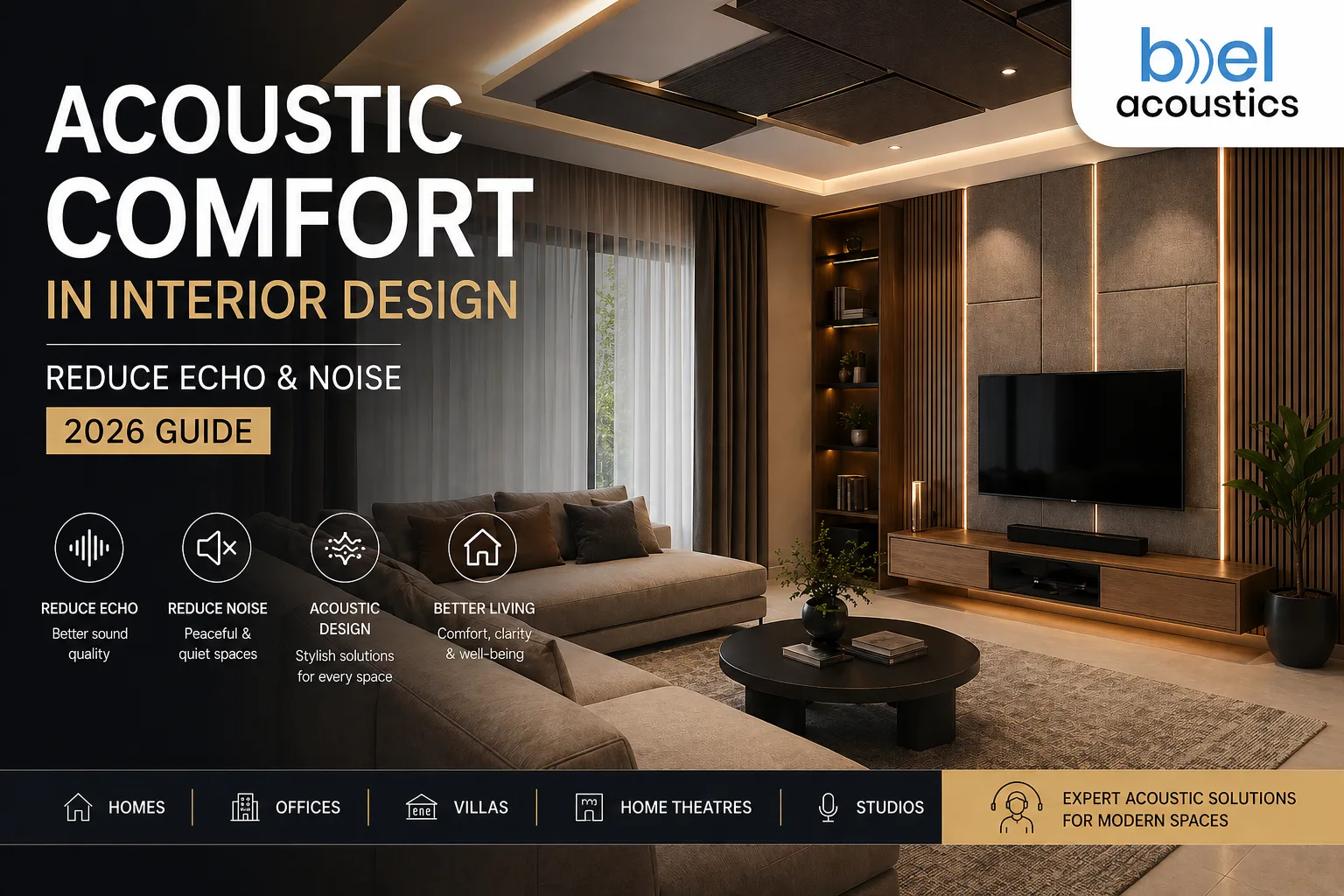
Beautiful interiors are not only about what you see. They are also about what you hear.
Many modern homes, villas, offices, studios, and open spaces look premium but feel noisy because of echo, hard surfaces, and poor acoustic planning. This is where acoustic design for homes and interiors becomes important.
A room with poor acoustics can make conversations unclear, make TV sound harsh, create stress, and reduce comfort. With the right acoustic panels, wall treatments, ceiling solutions, and soundproofing methods, you can make any space feel calm, premium, and comfortable.
Quick Answer: What Is Acoustic Comfort in Interior Design?
Acoustic comfort in interior design means creating a space where sound feels clear, balanced, and peaceful. It helps reduce echo, outside noise, speech disturbance, and sound reflections using acoustic panels, soft materials, soundproofing, carpets, curtains, ceiling treatments, and smart interior planning.
Noise is not just an annoyance; it can affect sleep, focus, stress, and daily comfort.
What Is Acoustic Design for Homes?
Acoustic design for homes is the process of controlling sound inside a room so it feels more comfortable.
It focuses on three things:
- Reducing echo
- Blocking unwanted noise
- Improving sound clarity
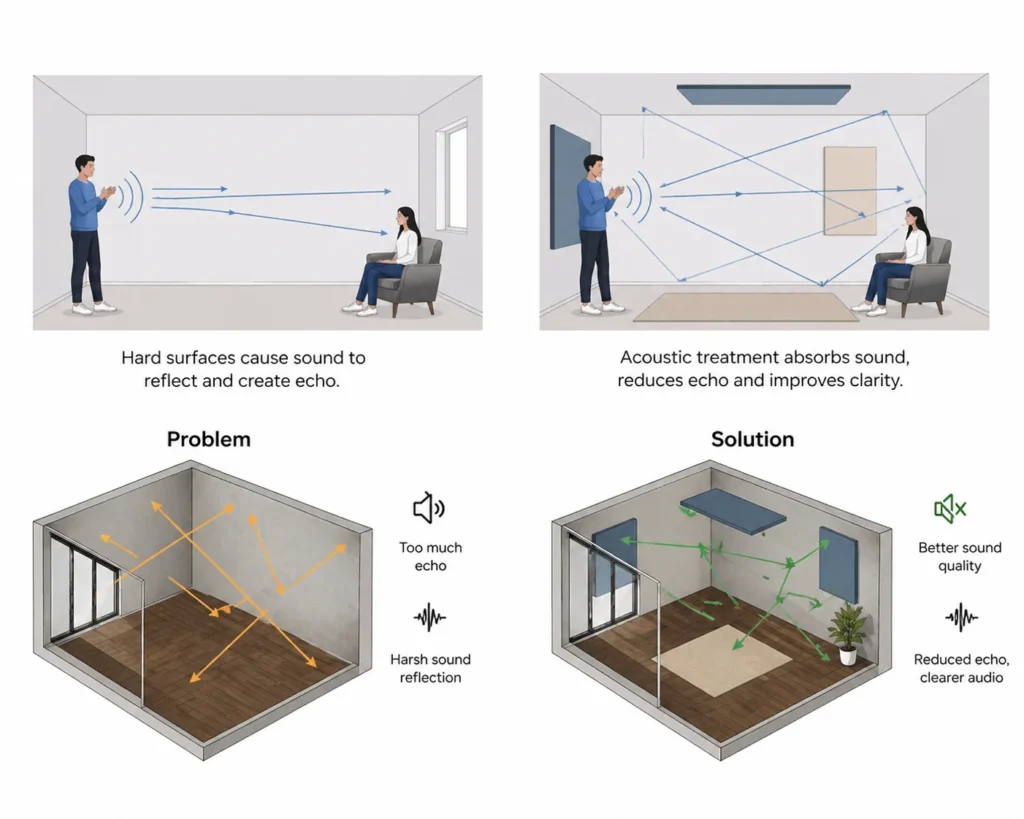
For example, a living room with marble flooring, glass windows, plain walls, and high ceilings may look luxurious, but sound will bounce everywhere. This creates echo and makes the room feel noisy.
Acoustic design solves this without spoiling the interior look.
Why Acoustic Comfort Is Becoming Important in 2026
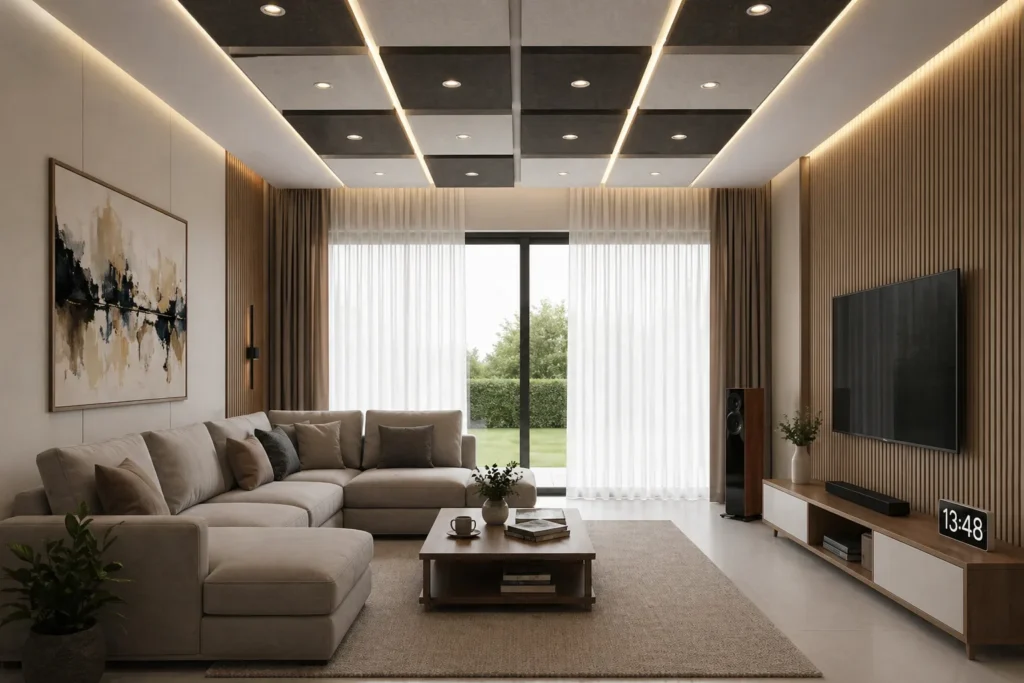
Modern interiors are more open, minimal, and hard-surfaced. This looks clean and premium, but it creates more echo.
Common modern interior features that cause sound issues:
- Open-plan living rooms
- Double-height ceilings
- Large glass windows
- Marble or tile flooring
- Plain painted walls
- Minimal furniture
- Home theatre rooms
- Work-from-home rooms
- Luxury villas with large spaces
This is why modern acoustic panels decor, fabric wall panels, acoustic ceiling panels, rugs, curtains, and soft interior materials are becoming part of premium interior design.
Main Causes of Echo and Noise in Rooms
1. Hard Surfaces
Sound reflects from hard surfaces like:
- Glass
- Marble
- Tiles
- Concrete walls
- Wooden panels
- Bare ceilings
The more hard surfaces you have, the more echo you will hear.
2. Large Open Spaces
Open spaces look beautiful, but they often create sound problems. This is common in villas, offices, cafes, home theatres, and open living rooms.
3. High Ceilings
High ceilings increase sound reflections. This makes speech unclear and creates a hollow feeling.
4. Poor Furniture Planning
Rooms with very little furniture usually sound empty and noisy.
5. Wrong Speaker Placement
In home theatres and living rooms, poor speaker placement can make bass heavy and dialogues unclear.
Acoustic Design for Homes: Best Solutions
1. Use Acoustic Wall Panels
Acoustic wall panels design is one of the best ways to reduce echo in a room.
They absorb sound reflections and make speech, music, and TV audio clearer.
Best places to use acoustic wall panels:
- Behind TV units
- Living room feature walls
- Home theatre side walls
- Bedroom headboard walls
- Office meeting rooms
- Podcast studios
- Dining areas
- Double-height walls
Pro Tip: Choose fabric acoustic panels that match your interior theme. They can look like premium decor, not technical treatment.
2. Add Acoustic Ceiling Treatment
Ceilings are often ignored, but they play a major role in echo control.
Acoustic ceiling solutions are useful for:
- Home theatres
- Offices
- Conference rooms
- Restaurants
- Churches
- Studios
- Open-plan homes
For large rooms, ceiling treatment can reduce sound bounce and improve overall comfort.
3. Use Soft Furnishings
Soft materials help absorb sound naturally.
Use:
- Thick curtains
- Rugs
- Carpets
- Upholstered sofas
- Fabric wall finishes
- Cushioned seating
- Bookshelves
- Soft headboards
This is a simple way to improve acoustic comfort without major renovation.
4. Soundproof Bedrooms and Home Offices
If outside noise is the issue, you need soundproofing for homes, not just acoustic panels.
Soundproofing helps block noise from:
- Traffic
- Neighbours
- Generators
- Pets
- Construction
- Lift lobby
- Home appliances
Good soundproofing may include:
- Door sealing
- Window acoustic treatment
- Wall insulation
- Ceiling isolation
- Floor underlay
- Double glazing
Important: Acoustic panels reduce echo inside a room. Soundproofing blocks sound from entering or leaving. Both are different.
5. Use Modern Acoustic Panels as Decor
Today, acoustic panels do not need to look boring.
You can use:
- Fluted acoustic panels
- Fabric acoustic panels
- Wooden slat acoustic panels
- Printed acoustic panels
- Designer wall panels
- Custom colour panels
- Acoustic art panels
This makes them perfect for luxury home acoustics and premium interiors.
Acoustic Comfort in Offices
Noise in offices can reduce focus and productivity. The EPA notes that noise can contribute to stress, speech interference, sleep disruption, and lost productivity.
Office acoustic solutions include:
- Acoustic wall panels
- Ceiling baffles
- Carpet flooring
- Meeting room soundproofing
- Phone booth acoustic treatment
- Workstation partitions
- Acoustic curtains
- Fabric-backed wall panels
Best areas to treat:
- Conference rooms
- Cabins
- Open workstations
- Reception areas
- Cafeterias
- Zoom call rooms
Villa Soundproofing Solutions
Villas usually have large rooms, open layouts, glass, and high ceilings. This creates echo and noise movement between spaces.
Best villa soundproofing solutions:
- Acoustic treatment for living rooms
- Home theatre acoustic design
- Bedroom soundproofing
- Door and window sealing
- Generator room sound isolation
- Acoustic panels for double-height areas
- Ceiling and wall absorption
- Outdoor-to-indoor noise control
For luxury villas, acoustic comfort should be planned during the interior design stage itself.
Common Mistakes People Make
1. Using Only Foam Panels
Cheap foam panels may not give a premium look or proper performance for homes.
2. Treating Only One Wall
Echo comes from multiple surfaces. One wall may not solve the full problem.
3. Confusing Soundproofing and Acoustic Treatment
Soundproofing blocks noise. Acoustic treatment improves sound inside the room.
4. Ignoring Ceiling Reflections
In large rooms, ceilings create a lot of echo.
5. Choosing Panels Only for Looks
Good panels should balance design and performance.
Best Rooms for Acoustic Interior Design
Acoustic comfort is useful in:
- Living rooms
- Home theatres
- Bedrooms
- Villas
- Apartments
- Offices
- Conference rooms
- Podcast studios
- Music rooms
- Restaurants
- Churches
- Schools
- Clinics
- Hotels
- Luxury lounges
Internal Linking Suggestions for BEL Acoustics
Add links to these service pages or blogs:
- Soundproofing Solutions in Bangalore
- Home Theatre Acoustic Design
- Podcast Studio Setup Solutions
- Acoustic Panels for Homes
- Office Acoustic Solutions
- Church Acoustics Solutions
- How to Soundproof a Room in Bangalore
External Authority References
You can refer to:
- EPA information on noise and health
- WHO guidance on environmental noise
- Research on office acoustic comfort and productivity
WHO notes that excessive noise is linked with annoyance, sleep disturbance, hearing impairment, hypertension, and other health impacts.
FAQs
1. What is acoustic comfort in interior design?
Acoustic comfort means designing a room so sound feels clear, calm, and controlled. It reduces echo, noise, and harsh reflections.
2. How can I reduce echo in my room?
You can reduce echo using acoustic wall panels, ceiling panels, curtains, rugs, carpets, fabric furniture, and soft wall finishes.
3. Are acoustic panels good for home interiors?
Yes. Modern acoustic panels improve sound comfort and also work as wall decor. They are useful for living rooms, bedrooms, offices, and home theatres.
4. What is the difference between soundproofing and acoustic treatment?
Soundproofing blocks sound from entering or leaving a room. Acoustic treatment reduces echo and improves sound quality inside the room.
5. Do luxury homes need acoustic design?
Yes. Luxury homes often have glass, marble, high ceilings, and open layouts, which create echo. Acoustic design makes the space feel more premium and peaceful.
6. Can acoustic panels be customized?
Yes. Acoustic panels can be customized in colour, size, fabric, pattern, shape, and design to match interiors.
7. What is the best acoustic solution for offices?
For offices, the best solutions include acoustic ceiling panels, wall panels, carpets, partitions, meeting room soundproofing, and call room treatment.
Conclusion
Acoustic comfort is no longer optional in modern interior design. A space may look beautiful, but if it sounds noisy, echo-heavy, or stressful, it will never feel truly premium.
With the right acoustic design for homes, acoustic panels, soundproofing, ceiling treatment, and noise reduction interior solutions, you can create interiors that look elegant and feel peaceful.
Want to reduce echo, noise, or sound problems in your home, villa, office, or studio? Contact BEL Acoustics for a customized acoustic comfort solution.
Contact US
📞 Call / WhatsApp: +91 97390 18885
📧 Email: info@belacoustics.in
📍 Location: Bengaluru, India
🗺 Find us on Google Maps: https://g.co/kgs/ZKWQbuK