
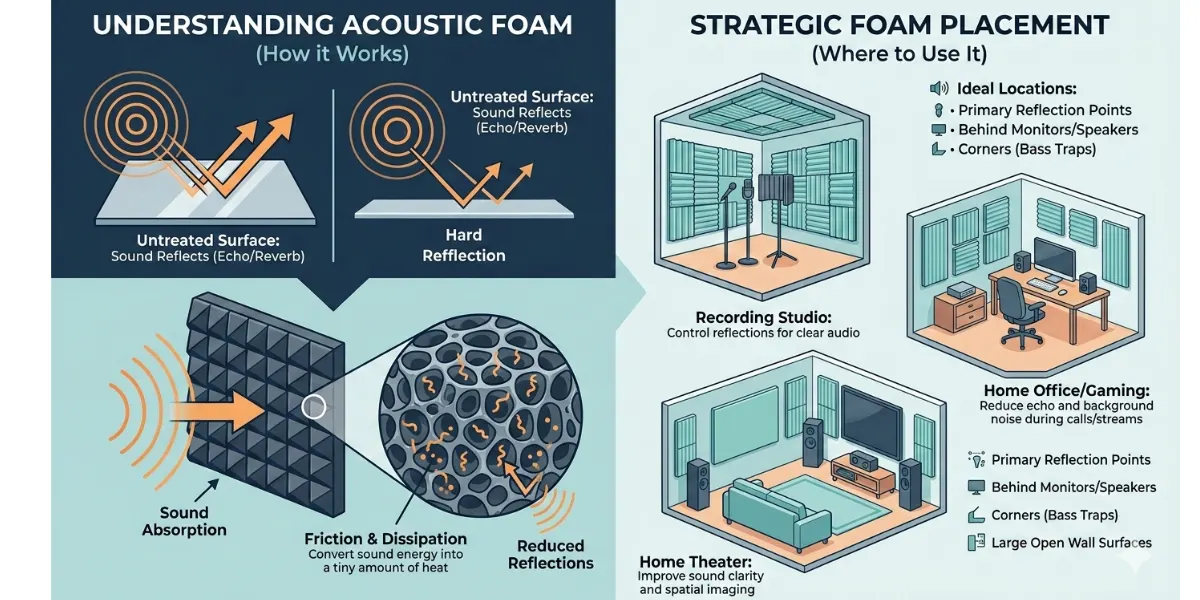

If you’ve ever stepped into a recording studio and noticed those patterned foam panels on the walls, you may have wondered:
How acoustic foam works?
Does it block sound?
Does it stop neighbors from hearing you?
Does it really improve audio quality?
In this in-depth guide, we’ll break down how acoustic foam works, where to use it in your space, and how to maximize its effectiveness for podcasts, home studios, YouTube setups, gaming rooms, offices, and apartments.
By the end of this article, you’ll understand:
- The science behind acoustic foam
- Where to place acoustic foam for best results
- Common myths about acoustic foam
- Professional placement techniques
- Mistakes that ruin sound quality
- How to use acoustic foam for business growth
Let’s dive deep.
What Is Acoustic Foam?
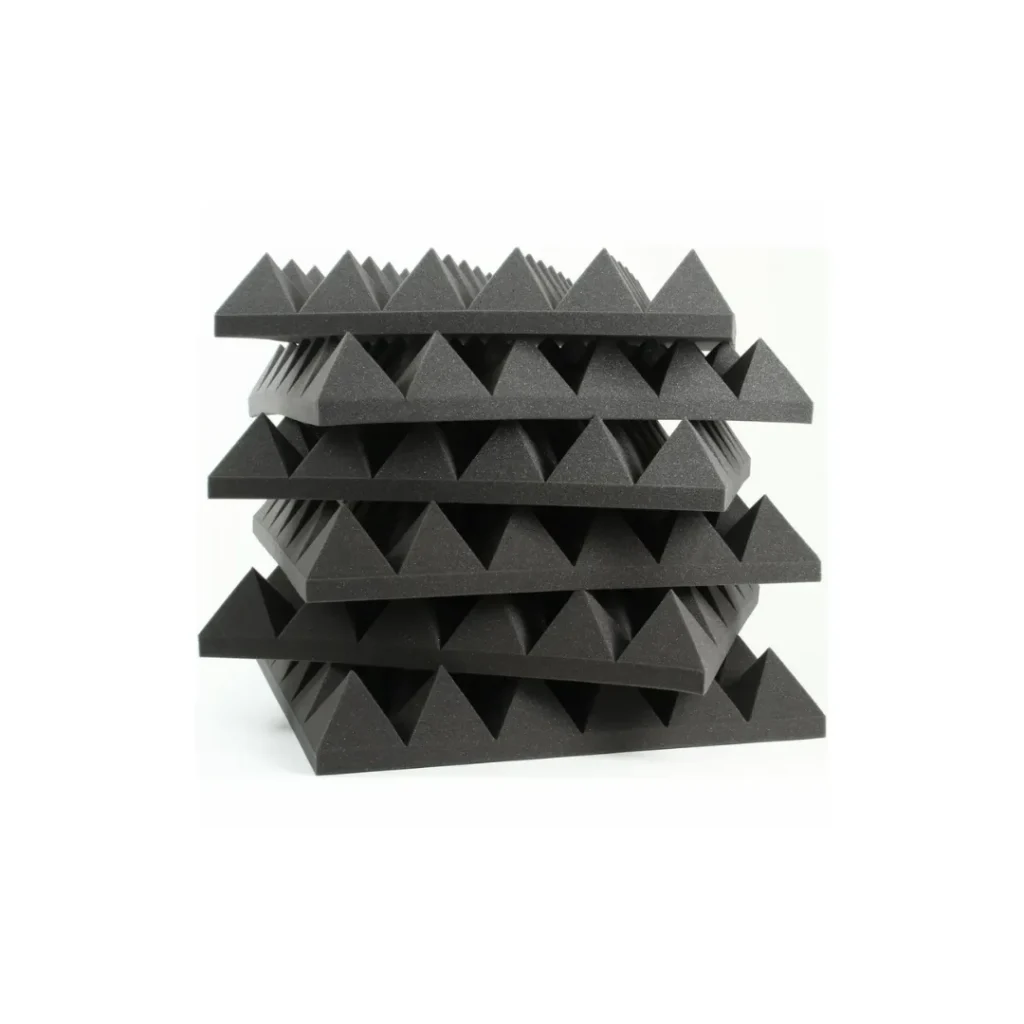
Acoustic foam is a sound-absorbing material designed to reduce echo, reverberation, and sound reflections inside a room.
It is typically made from:
- Open-cell polyurethane foam
- Melamine foam
- High-density acoustic materials
The purpose is NOT to block sound from entering or leaving a room.
Instead, acoustic foam improves sound clarity inside the space.
This distinction is critical when understanding how acoustic foam works.
How Acoustic Foam Works (The Science Explained Simply)
To truly understand how acoustic foam works, we need to understand what happens when sound travels.
When you speak:
- Sound waves leave your mouth.
- They hit walls, ceiling, floor.
- They bounce back.
- Those reflections mix with your original voice.
- That creates echo and muddiness.
Acoustic foam solves this problem.
The Science Behind How Acoustic Foam Works
Acoustic foam has an open-cell structure.
This means:
- Sound waves enter the foam.
- Air inside tiny pores vibrates.
- Energy converts into small amounts of heat.
- Sound reflections are reduced.
Instead of bouncing back, the sound gets absorbed.
That’s exactly how acoustic foam works.
It reduces:
- Echo
- Reverberation
- Flutter echo
- Hollow room sound
But remember:
Acoustic foam does NOT stop outside noise.
It is not soundproofing.
Acoustic Foam vs Soundproofing (Critical Difference)
Many people misunderstand how acoustic foam works and expect it to block traffic noise.
It won’t.
Acoustic Foam:
✔ Improves sound quality inside
✔ Reduces echo
✔ Controls reflections
Soundproofing:
✔ Blocks sound transmission
✔ Requires heavy mass
✔ Needs construction materials
If your goal is better audio clarity — acoustic foam is perfect.
If your goal is blocking neighbors — you need soundproofing materials.
Why Understanding How Acoustic Foam Works Matters
If you’re a:
- Podcaster
- YouTuber
- Musician
- Voice-over artist
- Online coach
- Gamer
- Content creator
Then room acoustics directly impact:
- Audio quality
- Audience retention
- Brand credibility
- Sales conversions
Professional sound builds trust.
Understanding how acoustic foam works helps you place it correctly and avoid wasting money.
Where to Use Acoustic Foam in Your Space
Now that you understand how acoustic foam works, let’s discuss placement.
Placement is everything.
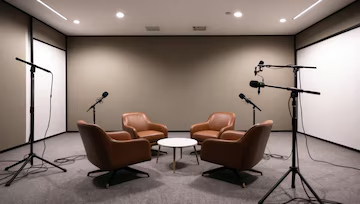
1. Behind Your Microphone
One of the best places to use acoustic foam is directly behind your microphone.
Why?
Because your voice travels forward and reflects back.
Foam behind the mic absorbs those reflections.
This improves vocal clarity instantly.
2. First Reflection Points (Side Walls)
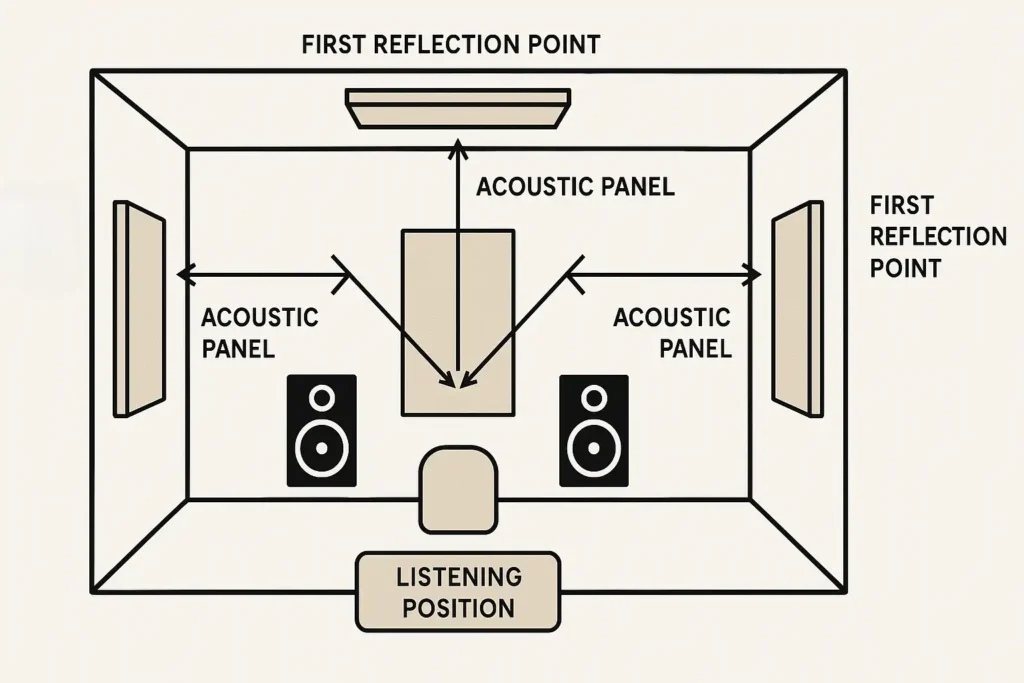
First reflection points are where sound first bounces after leaving your mouth or speakers.
To find them:
- Sit in recording position.
- Have someone slide a mirror along the wall.
- Wherever you see your mic in the mirror — that’s a reflection point.
Place acoustic foam there.
This is one of the most important aspects of how acoustic foam works effectively.
3. Behind Your Head

Sound reflects from the back wall and returns to your microphone.
Placing foam behind you reduces this echo.
4. Ceiling (Cloud Panels)
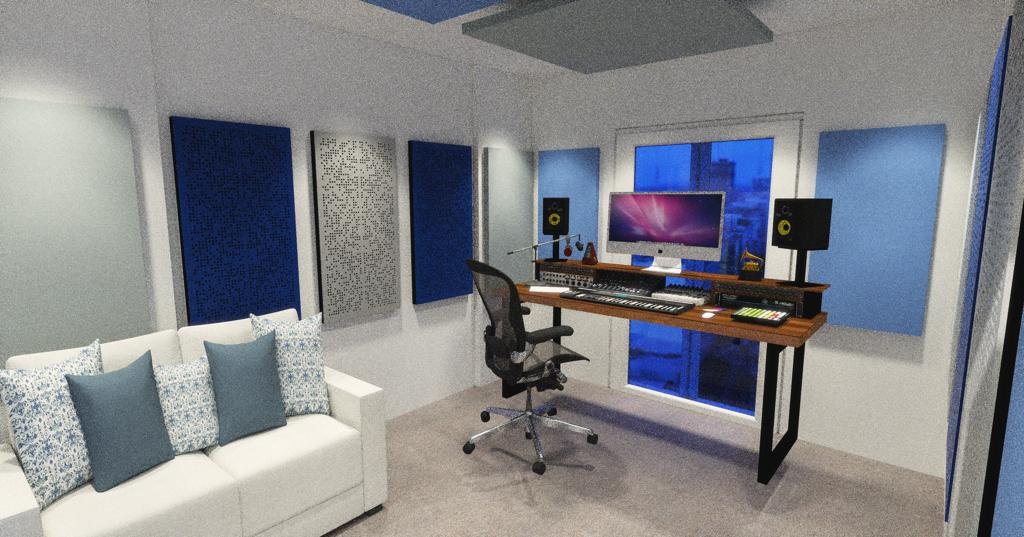
Sound reflects from ceilings too.
Installing foam panels (called acoustic clouds) above your recording area reduces vertical reflections.
5. Corners (Bass Control)
Low frequencies build up in corners.
Corner foam (bass traps) helps reduce muddiness.
This is critical for music production.
How Much Acoustic Foam Do You Need?
A common mistake when learning how acoustic foam works is over-covering walls.
You don’t need full coverage.
Start with:
- 20–30% wall coverage
- Focus on reflection points
- Add gradually
Too much foam can make room sound “dead”.
Balance is key.
Types of Acoustic Foam
- Wedge foam
- Pyramid foam
- Egg crate foam
- Bass traps
- Acoustic panels (fabric-covered)
Each type supports how acoustic foam works by increasing surface area and absorption.
Common Mistakes People Make
- Covering entire wall randomly
- Expecting soundproofing
- Buying thin low-density foam
- Ignoring ceiling
- Poor mic placement
Understanding how acoustic foam works prevents these mistakes.
Does Acoustic Foam Increase Sales & Leads?
Yes — indirectly.
Better sound quality:
- Improves listener trust
- Reduces drop-off rates
- Increases watch time
- Boosts conversions
- Enhances brand authority
If you run:
- Online courses
- Coaching programs
- Consulting services
- Digital products
Clear audio increases perceived professionalism.
Understanding how acoustic foam works helps you invest smartly.
Budget vs Professional Setup
Budget Setup
- Foam behind mic
- Side wall panels
- Rug
- Curtains
Professional Setup
- Full reflection treatment
- Bass traps
- Ceiling clouds
- Acoustic measurement
Final Thoughts: How Acoustic Foam Works in Real Life
Acoustic foam works by absorbing sound reflections, reducing echo, and improving clarity.
It does not block outside noise.
Correct placement is more important than quantity.
Understanding how acoustic foam works transforms your space into a professional-sounding environment — even in apartments.
FAQs – How Acoustic Foam Works
1. Does acoustic foam block outside noise?
No. It improves sound quality inside the room.
2. How thick should acoustic foam be?
At least 2 inches for voice. Thicker for music.
3. Can I use acoustic foam in apartments?
Yes. Use removable adhesive or freestanding panels.
4. Is acoustic foam worth it?
If you record audio regularly — absolutely.
5. How long does acoustic foam last?
High-quality foam lasts 5–10 years.
Want Professional Acoustic Setup?
If you want expert guidance on how acoustic foam works in your specific space — we provide complete end-to-end acoustic treatment solutions.
From assessment to installation, we design high-performance sound spaces that:
✔ Improve clarity
✔ Reduce echo
✔ Increase audience trust
✔ Help generate leads
Contact us today for a free consultation and transform your space into a professional recording environment.
Contact US
📞 Call / WhatsApp: +91 97390 18885
📧 Email: info@belacoustics.in
📍 Location: Bengaluru, India
🗺 Find us on Google Maps: https://g.co/kgs/ZKWQbuK