
The Only Podcast Studio Setup Guide You’ll Ever Need (For Serious Creators & Brands
Podcasting is no longer just a hobby.
It’s a business, a brand asset, and a powerful lead-generation tool.
But here’s the hard truth most people won’t tell you:
A bad podcast setup kills credibility faster than bad content.
Poor audio quality, echo-filled rooms, amateur mic placement, and noisy recordings instantly make listeners drop off — no matter how good your ideas are.
That’s exactly why end-to-end podcast setup solutions are no longer optional. They’re essential.
In this in-depth guide, we’ll break down everything involved in a professional podcast studio setup — from acoustic treatment to equipment selection, room design, installation, and future-proof scalability.
Whether you’re:
- A solo podcaster
- A corporate brand
- A YouTube creator
- A production house
- Or setting up a commercial podcast studio
This guide will help you build a studio that sounds world-class and converts listeners into loyal followers.
What Is an End-to-End Podcast Setup Solution?
An end-to-end podcast setup solution means everything is handled under one roof, instead of piecing things together randomly.
It includes:
- Acoustic design & sound treatment
- Noise control & soundproofing
- Podcast equipment selection
- Studio layout planning
- Installation & calibration
- Testing, optimization & handover
- Post-installation support
This approach eliminates:
- Compatibility issues
- Wasted money on wrong equipment
- Poor sound quality
- Rework and frustration
Most failed podcast studios fail not because of content, but because setup was done without professional planning.
Why Acoustics Matter More Than Expensive Equipment
(This Is Where Most Podcasters Get It Wrong)
You can buy the most expensive microphone in the world — but if your room acoustics are bad, your podcast will still sound terrible.
Acoustics define sound quality before equipment ever does.
Common acoustic problems in podcast rooms:
- Echo and reverb
- Hollow or boxy sound
- External noise leakage
- Room reflections
- Bass buildup
What professional acoustic treatment fixes:
- Voice clarity
- Listener fatigue
- Audio consistency
- Post-production workload
Podcast Studio Acoustic Treatment Explained
1. Sound Absorption (Primary Requirement)
Absorption panels reduce reflections and echo.
Used materials:
- Fabric-wrapped acoustic panels
- Polyester fiber panels
- Wood-wool boards
- Foam panels (limited use)
Placement matters more than quantity.
Random panels = wasted money.
2. Bass Traps (For Voice Depth & Warmth)
Low frequencies build up in corners.
Bass traps:
- Improve vocal warmth
- Prevent muddy recordings
- Balance male & female voices
Essential for:
- Small rooms
- Home studios
- Glass-heavy spaces
3. Diffusion (Optional but Premium)
Diffusers scatter sound instead of absorbing it.
Used in:
- Multi-host studios
- Interview rooms
- Professional podcast studios
Soundproofing vs Acoustic Treatment (Critical Difference)
Many people confuse these two.
Acoustic Treatment
- Improves sound inside the room
- Controls echo and reflections
- Mandatory for podcasts
Soundproofing
- Stops sound entering or leaving
- Requires construction-level solutions
- Optional unless noise is a problem
End-to-end podcast setup solutions assess whether you need both — or only acoustics, saving unnecessary costs.
Podcast Room Design & Layout Planning
Good podcast sound starts with room planning, not mic shopping.
Factors considered:
- Room size & dimensions
- Ceiling height
- Wall materials
- Glass surfaces
- Furniture placement
- Speaker & mic positioning
Layout planning ensures:
- Correct mic-to-mouth distance
- Comfortable host posture
- Camera-friendly framing
- Proper cable routing
- Clean aesthetics for video podcasts
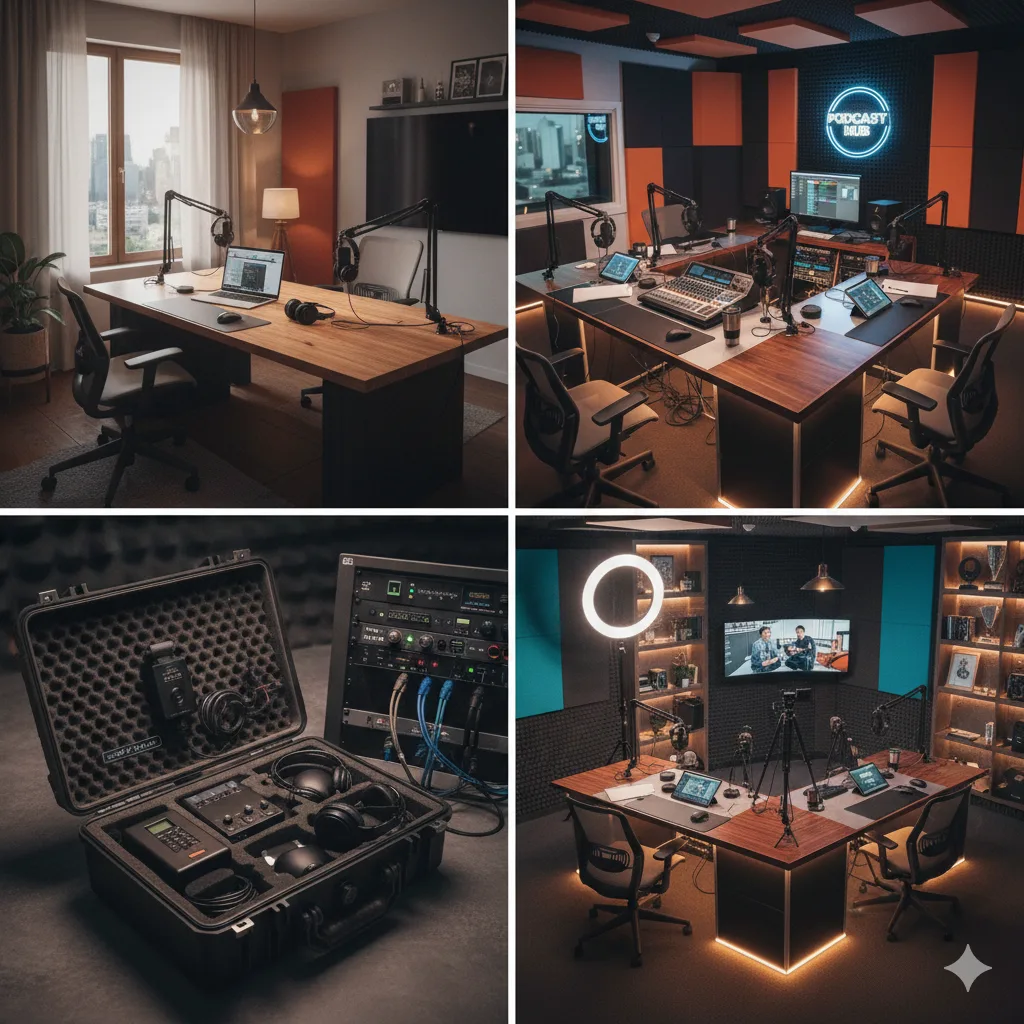
Professional Podcast Equipment Selection (No Guesswork)
Microphones (The Heart of Your Podcast)
Dynamic microphones are preferred for podcasts because they:
- Reject background noise
- Sound warm and broadcast-ready
- Perform well in treated rooms
Condenser mics are used only in well-treated studios.
Audio Interfaces & Mixers
Your interface converts voice into digital signal.
Key considerations:
- Number of inputs
- Preamp quality
- Future scalability
- USB / XLR compatibility
Headphones (Monitoring Matters)
Closed-back headphones prevent sound bleed and allow:
- Real-time monitoring
- Detecting clipping or noise
- Clean editing later
Boom Arms, Stands & Shock Mounts
These aren’t accessories — they’re essentials.
They:
- Reduce vibrations
- Improve mic positioning
- Enhance recording comfort
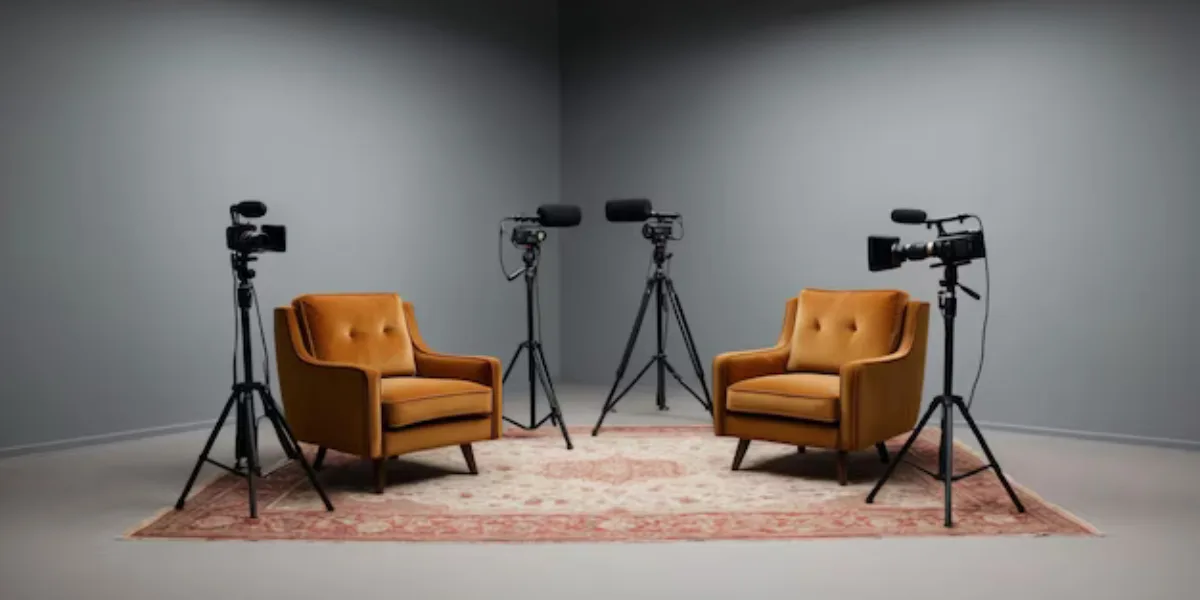
Video Podcast Setup Integration
Modern podcasts are audio + video.
End-to-end podcast setup solutions integrate:
- Camera placement
- Lighting design
- Acoustic-friendly aesthetics
- Cable management
- Multi-angle layouts
So your studio looks as professional as it sounds.
Lighting Design for Podcast Studios
Bad lighting ruins even great audio.
Professional lighting setup includes:
- Key light
- Fill light
- Back light
- Color temperature control
Balanced lighting:
- Enhances skin tone
- Reduces shadows
- Improves viewer retention
Installation, Calibration & Testing
This is where DIY setups usually fail.
Professional setup includes:
- Panel alignment & mounting
- Mic gain staging
- Interface calibration
- Noise floor testing
- Echo & reflection checks
- Recording test sessions
Only after testing is a studio truly ready to publish.
Why End-to-End Podcast Setup Solutions Convert Better
From a business point of view, a professional podcast studio:
- Builds brand authority
- Improves audience trust
- Increases watch time
- Boosts platform algorithms
- Attracts sponsorships
- Converts listeners into leads
That’s why brands and serious creators don’t gamble with DIY setups anymore.
Who Needs Professional Podcast Setup Solutions?
✅ Business Owners & Founders
✅ Coaches & Consultants
✅ Corporate Marketing Teams
✅ Content Creators & Influencers
✅ Educational Institutions
✅ Media Production Houses
If your podcast represents your brand, quality is non-negotiable.
Common Mistakes People Make (And How to Avoid Them)
❌ Buying equipment before treating acoustics
❌ Using foam everywhere without design
❌ Ignoring bass problems
❌ Poor mic placement
❌ Overpaying for unnecessary gear
❌ No future scalability planning
An end-to-end approach eliminates all of these.
Why Choose a Turnkey Podcast Studio Setup Instead of DIY
DIY:
- Trial & error
- Hidden costs
- Inconsistent results
- Time-consuming
Professional End-to-End Setup:
- Predictable quality
- Optimized budget
- Faster launch
- Long-term reliability
How End-to-End Podcast Setup Solutions Save Money Long-Term
It may seem premium upfront — but it:
- Prevents rework
- Avoids wrong purchases
- Reduces editing costs
- Extends equipment lifespan
Cheap setups are the most expensive in the long run.
Future-Proofing Your Podcast Studio
A good setup considers:
- Multi-host expansion
- Video upgrades
- Streaming capabilities
- Platform changes
- Sponsorship requirements
End-to-end solutions are designed to grow with you, not limit you.
Why BEL Acoustics-Style Podcast Setup Solutions Stand Out
(You can customize this section for your brand)
- Industry-grade acoustic materials
- Custom-designed layouts
- Honest equipment recommendations
- Clean, professional installation
- Post-installation support
- Solutions, not product pushing
Ready to Build a Podcast Studio That Sounds Professional?
If you’re serious about podcasting, your setup should reflect it.
A professionally designed end-to-end podcast setup solution ensures:
- Studio-grade sound
- Visual appeal
- Brand authority
- Long-term ROI
📞 Book a Free Podcast Studio Consultation
Let experts analyze your room, goals, and budget — and design a solution that actually works.
👉 Contact us today
👉 Get a custom acoustic & equipment plan
👉 Launch your podcast with confidence
Whether you’re building a home podcast studio setup or a professional podcast studio setup, investing in acoustics, soundproofing, and correct equipment will give you the best long-term results.
Want a professional podcast studio with crystal-clear sound?
We design & build acoustic-optimized podcast rooms for homes, offices & commercial studios.
📞 Call / WhatsApp: +91 97390 18885
📧 Email: info@belacoustics.in
📍 Location: Bengaluru, India
🗺 Find us on Google Maps: https://g.co/kgs/ZKWQbuK
Frequently Asked Questions (FAQs)
What is an end-to-end podcast setup solution?
An end-to-end podcast setup solution is a complete, turnkey approach to building a professional podcast studio. It covers everything from acoustic treatment and room design to podcast equipment selection, installation, calibration, and testing.
Instead of buying random gear or experimenting with DIY fixes, an end-to-end solution ensures your podcast studio is acoustically optimized, technically correct, and future-ready from day one. This approach saves time, avoids costly mistakes, and delivers consistent, broadcast-quality sound.
How much does a professional podcast studio setup cost?
The cost of a professional podcast studio setup depends on several factors, including:
- Room size and condition
- Level of acoustic treatment required
- Number of microphones and hosts
- Audio and video integration
- Quality of equipment chosen
In general, a basic professional podcast setup can start from a modest budget, while fully treated, multi-host, video-enabled studios require higher investment.
An end-to-end podcast setup solution focuses on budget optimization, ensuring you spend money where it actually improves sound quality and long-term performance — not on unnecessary equipment.
Do I need acoustic treatment for podcasting?
Yes — acoustic treatment is essential for podcasting, regardless of whether you are a beginner or a professional.
Even the best microphones cannot fix:
- Echo
- Reverb
- Hollow or boxy sound
- Poor voice clarity
Acoustic treatment controls how sound behaves inside the room, making voices sound clear, warm, and professional. Without proper acoustic treatment, podcasts often sound amateur and tiring to listen to, which leads to audience drop-off.
What equipment is required for a professional podcast studio?
A professional podcast studio typically requires:
- High-quality microphones (dynamic or condenser, depending on acoustics)
- Audio interface or mixer
- Closed-back monitoring headphones
- Boom arms or microphone stands
- Shock mounts and pop filters
- Recording or streaming software
- Optional video cameras and lighting for video podcasts
The exact equipment depends on your room acoustics, podcast format, and future expansion plans, which is why professional podcast setup solutions always start with planning — not shopping.
Is soundproofing necessary for podcast recording?
Soundproofing is not always necessary, but it depends on your environment.
You may need soundproofing if:
- You have heavy traffic noise
- Nearby conversations are audible
- Construction or machinery noise is present
- You’re recording in a commercial or noisy location
For many podcasters, acoustic treatment alone is sufficient. A professional end-to-end podcast setup solution evaluates your space first and recommends soundproofing only when truly required, helping you avoid unnecessary construction costs.