
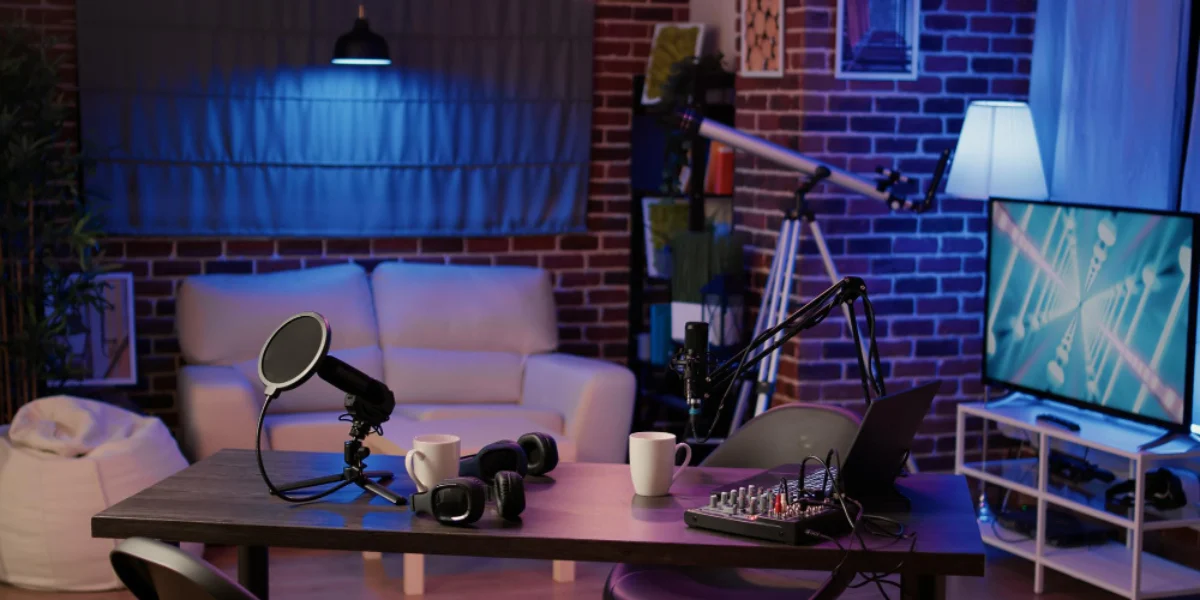

In today’s world, acoustic comfort and sound quality have become just as important as aesthetics and function. Whether it’s a corporate office, a podcast studio, a café or restaurant, or a hotel lobby — the right acoustic treatment can transform the space: improving comfort, clarity, privacy, productivity, and overall experience. But the “right solution” depends heavily on how the space is used.
In this blog post, we’ll walk you through how to choose acoustic solutions tailored to different sectors — Offices, Podcast / Recording Studios, and Hospitality — and why a one-size-fits-all approach rarely works.
Why “Acoustics” Matter — Not Just for Music, But for Everyday Spaces
Before diving into solutions, it helps to understand what “good acoustics” really means:
- Every enclosed space has its own natural acoustic behaviour — influenced by shape, size, surfaces, materials, layout.
- If the room is “hard” (lots of concrete, glass, empty walls/floor), sound waves reflect — causing echoes, reverberation, and sometimes “boomy” low frequencies.
- Acoustic treatment aims to control reflection, reverberation, resonance — by absorbing, diffusing, or isolating sound.
- For different uses — speech clarity, privacy, music quality, mood, ambience — the “ideal acoustic profile” changes. That’s why one space’s acoustic solution may break another space.
Hence, when you offer acoustic treatment services, aligning the treatment design to the use-case is critical. Below we break down how offices, podcast studios, and hospitality spaces differ — and what kind of acoustic treatment each typically needs.
Offices — Focus on Speech Clarity, Productivity & Privacy
🏢 What Offices Need (and Why)
Offices are about people interacting — calls, meetings, collaboration, concentration work. Add to that common modern layouts: open-plan offices, shared desks, glass partitions, mixed zones (quiet work / discussion / meeting pods). Without proper acoustics, offices may suffer from:
- Unwanted noise from chatter, phones, HVAC, footsteps — distracting employees
- Echoes and reverberation reducing speech intelligibility (hard to hear colleagues or calls)
- Lack of privacy — conversations leaking across desks or rooms
- Stress and lower productivity due to constant noise and lack of acoustic comfort
In fact, studies show that acoustic design has a direct impact on employee efficiency, satisfaction and well-being.
🎯 What Acoustic Solutions Offices Need
Depending on layout and use (open-plan, cabins, meeting rooms, etc.), offices benefit from a combination of:
- Acoustic wall or ceiling panels — to absorb noise, reduce reflections, and lower reverberation.
- Sound masking / background noise systems — in large open-plan offices or where privacy is important, adding a subtle background sound can mask speech and reduce distractions.
- Furniture, dividers, carpets, acoustic partitions — soft surfaces, rugs, partitions help reduce sound travel and add absorption.
- Zoned acoustic design — treat different zones differently: quiet zones (for focused work) vs collaboration zones vs meeting rooms. Treat meeting rooms with more absorption / isolation; collaboration zones perhaps with diffusers to avoid dead-sound.
✅ What to Emphasize When Working with Office Clients
If you pitch acoustic treatment services to offices:
- Highlight benefits like “improved speech clarity during calls/meetings”, “reduced noise distractions”, “better focus & productivity”, “privacy for sensitive conversations”.
- Offer flexible packages: e.g. “Open-plan acoustic upgrade”, “Conference-room sound optimization”, “Hybrid: focus + meeting zones acoustic plan”.
- Suggest acoustic + design harmony: choose panel colours/materials that match office interior so acoustic treatment doesn’t look like retrofitted “afterthought.”
- Add value by offering site acoustic assessment — many offices (especially in older buildings) don’t realize how much noise affects productivity until they measure it.
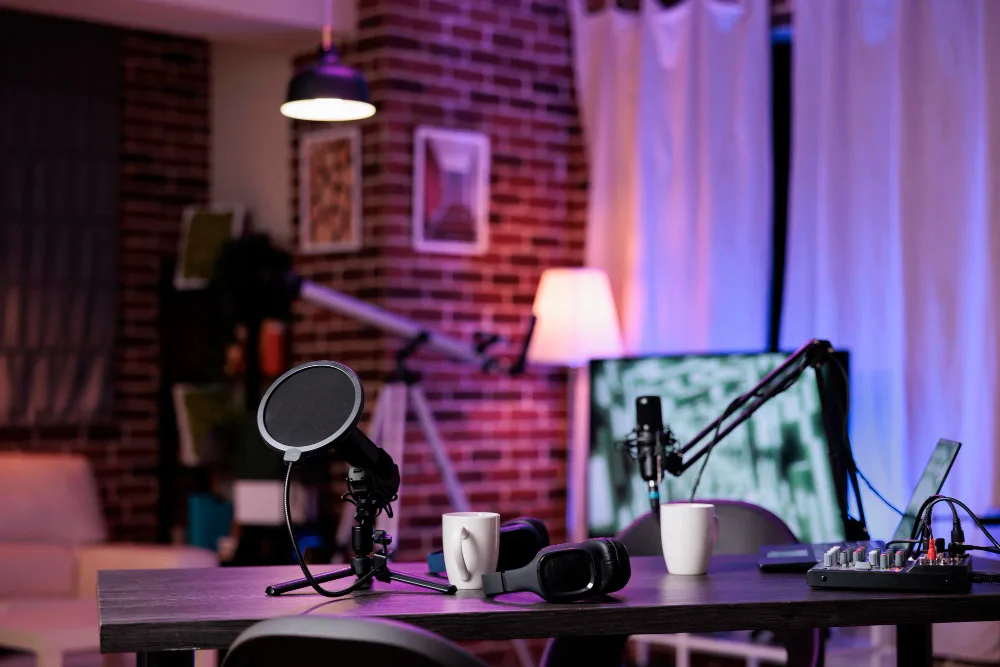
Podcast Studios & Recording Spaces — Focus on Clarity, Neutral Acoustics, Sound Isolation
🎙 Why Podcast Studios Have Different Needs
In a podcast studio, quality of sound is everything. Whether it’s a solo podcast, interview, group discussion, or music-heavy production — what you record (voice, music, ambient noise) should come out clean, clear, with minimal interference, echo, or background noise.
Problems to avoid:
- Ambient noise: traffic, outside noise, HVAC, other rooms — can ruin a take.
- Reflections, flutter echo, standing waves: especially in small rooms with parallel walls — leading to “boxy,” “tinny,” or “boomy” recordings.
- Low-frequency problems: bass build-up, uneven bass response — problematic for music, deep-voice podcasts, audio quality.
Thus, acoustic treatment for studios must be more precise — not just “make it quieter,” but shape the sound environment to be neutral, controlled, and predictable.
🔧 What Acoustic Solutions Podcast Studios Need
For a well-treated podcast/recording studio, consider:
- Acoustic absorption panels (walls & ceiling) — to control reflections and reverberation. Porous materials, fabric-wrapped panels or acoustic foam do well for mid–high frequencies.
- Bass traps (corners, intersections) — to manage low-frequency energy and avoid boomy bass or standing waves.
- Diffusion (if needed) — for larger studios or music production rooms where you don’t want the space to be “dead,” but still want clarity.
- Sound-proofing / isolation / sealing — to block external noise (traffic, neighbors, HVAC), and prevent sound leakage in or out of the room. Doors, windows, vents need attention.
- Room selection & layout — choose a room with non-parallel walls, avoid noisy areas (outside walls near traffic), consider ceiling height.
Also — treat acoustics + ergonomics + aesthetics: for podcast clients, comfort, look & feel, and user-experience matter too (mic placement, lighting, ambience), as discussed by many podcast-setup guides.
🎯 What to Emphasize When Pitching to Podcast / Creator Clients
When offering services to podcasters or music-producers:
- Sell “studio-grade audio quality” — not just silence, but controlled acoustic space where voice or instruments sound crisp, natural, and high-fidelity.
- Offer tiered packages: basic absorption for small rooms or home-studios; premium package with bass traps, diffusion, sealing for higher-end studios.
- Provide room-analysis + custom layout — before installing panels; map out panel placement, bass trap corners, mic positioning.
- Emphasise sound isolation — especially for urban clients (e.g. in Bangalore flats) where external noise (traffic, neighbours) can spoil recordings.
Hospitality Spaces (Restaurants, Cafés, Hotels, Lounges) — Focus on Ambience, Conversation Comfort & Acoustic Branding
🍽 Why Hospitality Spaces Need Thoughtful Acoustic Design
In hospitality — restaurants, cafés, lounges, hotel lobbies — sound plays a subtle but powerful role. Guests judge ambience, comfort, conversation clarity, privacy, and overall feel. Poor acoustics — too much echo, loud background noise, harsh reverberation — can spoil the experience, lead to customer dissatisfaction, and even affect dwell time or repeat visits.
Unlike offices or studios, hospitality spaces need live but controlled sound — warm ambience, comfortable conversations, soft music, but without noisy overlap or echo.
Issues to address:
- Loud chatter mixing with hard room reflections, making conversation difficult.
- Overly “dead” sound when using too many absorption panels — can make space feel unnatural / closed.
- Low-frequency resonance (boomy bass) if music/sound systems are present.
- Sound leaking between zones (e.g. restaurant to lobby, lounge to dining area).
🎨 What Acoustic Solutions Work for Hospitality
For hospitality venues, the acoustic solution often combines absorption, diffusion, and aesthetic integration — so the space sounds good and looks welcoming. Some useful treatments:
- Fabric-wrapped acoustic panels, decorative acoustic panels, or perforated wood panels — these absorb mid-high frequencies while blending with décor.
- Ceiling clouds / baffles / hanging panels — especially useful for high-ceiling spaces (hotel lobbies, lounge bars) where ceiling reflections can cause echo.
- Diffusers — to scatter sound and keep the ambience “alive,” while avoiding sharp echoes or flat, dead sound.
- Zoning & layout-based acoustic planning — separate louder zones (bar, music area) from conversation zones (dining tables, lounge seating) using partitions, acoustic dividers, curtains, or furniture arrangement. (Same principles as reverberation/absorption/diffusion).
- Soft furnishing, carpets, curtains, acoustic décor — not just for sound, but for comfort, warmth and ambience — which hospitality clients often care about.
💡 What to Emphasize When Pitching to Hospitality Clients
For restaurants, cafés, hotels — pitch acoustic treatment not as a technical add-on, but as an ambience and customer-experience upgrade.
- Highlight benefits like “comfortable conversation atmosphere,” “less echo, better music experience,” “sound privacy between zones,” “better guest satisfaction and longer stays.”
- Offer custom design + acoustic + interior synergy — make acoustic panels match the design, colours, décor; acoustic treatment shouldn’t feel like a “studio retrofit.”
- Suggest zoned treatment — treat high-traffic / loud zones differently from dining/conversation zones.
- Position acoustic treatment as an investment in brand & comfort — for a restaurant/hospitality business, good acoustics is part of the guest experience, which can translate to positive reviews and repeat customers.
Key Acoustic Solutions — What Works, What to Choose & Why
When selecting acoustic treatment solutions, you have many options. But for each use-case (office, studio, hospitality), some solutions stand out more than others. Below is a quick breakdown.
| Solution / Material / Technique | Best For | What It Solves / Advantages |
|---|---|---|
| Fabric-wrapped acoustic panels | Offices, hospitality, podcast studios (mid-high frequency control) | Absorbs reflections/echo, reduces reverberation, doesn’t kill the room feel, customizable design. |
| Acoustic foam | Budget home-studios, small podcast booths, practice spaces | Lightweight, decent absorption (especially mid-high), affordable, good for echo control. |
| Bass traps / corner traps | Podcast studios, music rooms, any room needing low-frequency control | Absorbs low-frequency build-up, controls bass resonance and “boomy” sound. |
| Diffusers / Acoustic diffusion panels | Hospitality spaces, larger studios, music rooms | Keeps natural sound, avoids overly dead room, distributes sound energy evenly. |
| Ceiling clouds / baffles / hanging panels | High-ceiling offices, lobbies, restaurants, large studios | Controls vertical reflections and reverberation, useful where floor-standing panels are not enough. |
| Soundproofing / isolation (mass, sealing, wall treatment) | Podcast studios, private offices, rooms near traffic/noise | Prevents external noise infiltration, sound leakage; crucial for clear recordings or private conversations. |
| Sound masking / background ambient systems | Open-plan offices, call centres, mixed-use offices | Reduces intelligibility of distant voices, helps privacy and reduces distractions. |
Important: Acoustic treatment is rarely just one solution — often a combination of absorption + diffusion + isolation + design gives the best result
How to Decide — Step-by-Step Approach
When a client approaches here’s a our workflow:
- Understand the use-case / purpose
- Is it an office (open‐plan / cabins / meeting rooms)?
- Is it a podcast/studio/recording room?
- Is it a hospitality space (restaurant, café, lounge, hotel lobby)?
- Survey the space: geometry, surfaces, layout, zones, potential noise sources
- Measure room size, ceiling height, wall materials, floor materials, presence of glass/windows, HVAC or external noise sources.
- Identify possible noise sources: traffic, neighbours, HVAC, mechanical systems, appliances.
- Define acoustic goals
- For office: reduce distractions, improve speech clarity, ensure privacy.
- For studio: neutral sound, minimal reflections, sound isolation.
- For hospitality: comfortable ambience, balanced reverberation, good conversation & music environment.
- Choose the right mix of treatments
- Absorption panels, bass traps, diffusers, ceiling clouds, sound-proofing, masked noise as per need.
- Consider design integration — for hospitality/office spaces, aesthetic matters.
- Plan layout and installation carefully
- Panel placement, corner traps, ceiling treatment, sealing doors/windows, acoustic sealing for external noise.
- For studios: also plan mic placement, furniture layout, possible isolation booths.
- Test & iterate
- Once treatment is installed, do real-world tests (meetings, recordings, dinner-service, music playback) — see what still needs adjustment. Reflection problems often show up only after people start using the space.
- Adjust: add more absorption or diffusion, relocate panels, add masking, or upgrade to more advanced sound-proofing if needed.
Why Outsourcing to Acoustic Professionals
Many clients underestimate how tricky “good acoustics” really is. Here’s why they’ll value your expertise:
- Expert acoustic analysis: Predicting how a room will behave acoustically isn’t obvious. Without experience, many treatments are hit-or-miss; often result in over-deadening, insufficient isolation, uneven results.
- Tailored solutions for use-case: Offices, studios and hospitality have wildly different goals. Offering custom solutions — not one-size-fits-all.
- Design + acoustics integration: Many clients want the space to look good — not just sound good. We can offer both performance and aesthetics (panels that match interiors, ceiling clouds that look like décor, diffusers that double as art/decor).
- Professional-grade sound / privacy / comfort: For studios and hospitality venues, sound quality & ambience often correlates with client satisfaction, brand value, repeat business.
- Maintenance, scalability and future-proofing: As clients expand, convert spaces, or change use (e.g. office to co-working space, café to live-music lounge) —We offer modular, flexible acoustic treatment.
Conclusion & Final Thoughts
Acoustic treatment is no longer a niche for music studios alone — it’s now essential across offices, hospitality spaces, content-creation studios, co-working spaces, cafés, and even homes. As sound becomes a key part of user experience, comfort, productivity and brand perception, the demand for thoughtful acoustic design is rising.
But effective acoustic treatment is never “one-size-fits-all.” Different spaces — offices, podcast studios, hospitality venues — have different goals, challenges and priorities. That’s why, as an acoustics business, your strength lies in tailored, use-case-driven solutions.
By understanding the unique acoustic needs of each sector and offering solutions that combine performance, aesthetics, and practicality, you can carve out a strong niche for your business.
If you like, I can also suggest 5 ready-to-use blog titles based on this article (with meta descriptions & SEO-optimised). This way, you have a ready content calendar item.
Let me know if you’d like me to build that list for you now!
Ready to improve the acoustics of your space?
From offices to podcast studios to hospitality venues, we design and deliver tailored acoustic solutions that work — visually and acoustically.
👉 Get a FREE acoustic site assessment today.
📞 Phone: +91 97390 18885
📧 Email:info@belacoustics.in
🌐 Website:www.belacoustics.in
📍 Address: 235/E, Bommasandra Industrial Area, Bengaluru, Bommasandra, Karnataka 560099
💬 WhatsApp: +91 97390 18885 (Click to chat)